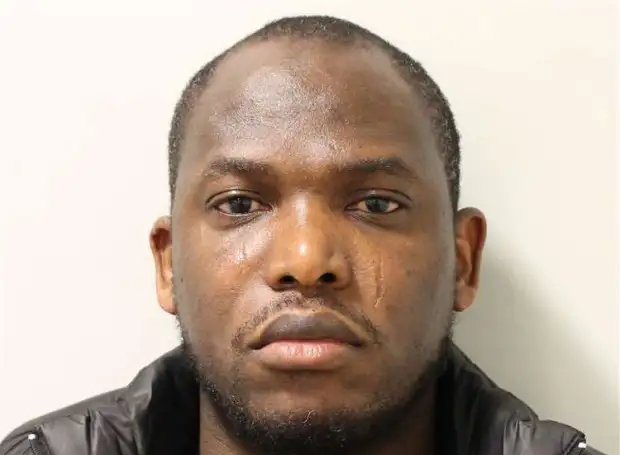










Akinwande Soji-Ojo
A Nigerian national, Olutobi Ogunbawo, has told a tribunal in the United Kingdom (UK) that his wife cannot undergo the in vitro fertilisation (IVF) procedure in Nigeria.
Ogunbawo, 43, is fighting a planned deportation to Nigeria on human rights grounds after he was issued a notice by the UK government in 2019, reports.
A UK court had in October 2019 聽聽Ogunbawo of 鈥渃onspiring/assisting unlawful immigration and seeking to obtain leave to enter/remain in the UK by deception.鈥�
He was subsequently sentenced to three years in prison.
Ogunbawo was accused of plotting with his then pregnant wife, Maria Adesanya, to pay Adekunle Adeparusi, a British citizen, to register himself as the father of their child.
He was said to have believed that the move would enable his wife, and the child to stay in the UK.
Following his conviction, Ogunbawo was issued with a deportation notice to Nigeria in November 2019.
However, he approached a first-tier tribunal on immigration to stop the deportation on human rights grounds.
During the tribunal proceedings, Ogunbawo鈥檚 wife told the tribunal that the chances of her conceiving would be 鈥榥on-existent鈥� in Nigeria if her husband is deported to his home country.
Adesanya also told the court that IVF treatment centres are not available in Nigeria.
In January 2023, the first-tier tribunal ruled that it will be 鈥渦nduly harsh鈥� to deport Ogunbawo. The tribunal thereafter dismissed the deportation notice issued against him.
The first-tier tribunal judge, identified as Judge Malone, based his judgement on the claim that Ogunbawo鈥檚 wife cannot get IVF treatment in Nigeria.
But the claim that an IVF procedure cannot be done in Nigeria was聽untrue.
Displeased with the decision of the first-tier tribunal, the UK Secretary of State for the Home Department approached the upper tribunal.
The upper tribunal in its ruling on November 4, 2024聽聽that the judge of the lower tribunal should not have relied on the personal evidence given by Adesanya that there were no IVF treatment centres in Nigeria.
The upper tribunal judges, O’Callaghan and Saini, agreed with the assertion of the UK Secretary of State for the Home Department that a simple Google search will reveal the existence of IVF centres in Nigeria.
The upper tribunal dismissed the judgement of the first-tier tribunal and ordered that the case should be returned to the lower court.
鈥淲e conclude that the judge erred in exclusively relying upon Ms. A鈥檚 (referring to Maria) personal evidence when finding as a fact that IVF treatment is unavailable in Nigeria.
鈥淚n circumstances where neither party filed objective evidence as to the availability of IVF treatment in Nigeria, the judge failed to address in his reasoning as to how Ms. A had formed her personal view.
鈥淲hilst it may have been her subjective view that the treatment is unavailable, the judge was required to assess and determine the objective fact of whether IVF treatment is available in Nigeria or not.
“For example, we cannot discern from the judge鈥檚 decision whether he concluded that IVF treatment is unavailable based upon a bald assertion from Ms. A without her having performed any research into what IVF treatment is available in Nigeria, or equally whether his finding is based upon oral evidence detailing efforts she made in contacting hospitals and clinics in Nigeria about offering fertility treatment.
鈥淲e observe the Secretary of State鈥檚 unchallenged assertion before us that even the most basic Google search reveals the existence of IVF treatment in Nigeria.
鈥淭he Secretary of State鈥檚 appeal is allowed to the extent that the decision of the First-tier Tribunal is set aside in its entirety.
鈥淭he appeal is to be remitted to the First-tier Tribunal to be heard by any judge other than First-tier Tribunal Judge Malone,鈥� the upper tribunal ruled.