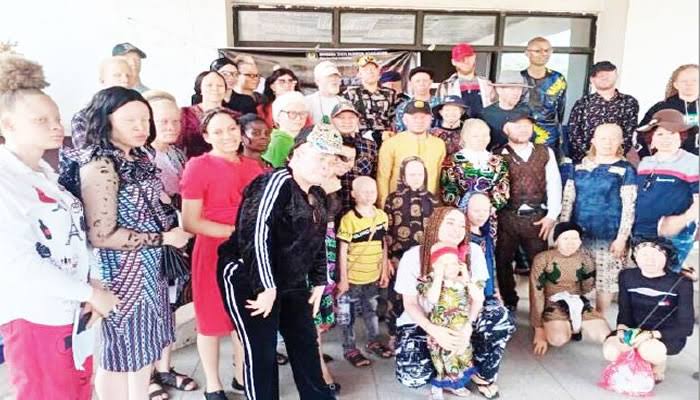
Nigeria joined the global community to mark the 2025 International Albinism Awareness Day (IAAD), observing this year鈥檚 theme, 鈥淒emanding our rights: Protect our skin, Preserve our lives.鈥�
Various states and civil society organisations held events focused on advocacy, education, and healthcare to spotlight the unique challenges faced by persons with albinism (PWAs) in the country.
The Albinism Association of Nigeria (AAN) spearheaded nationwide rallies, press briefings, and community engagements. They renewed their call for the full implementation of the 2019 National Policy on Albinism, which remains largely dormant.
AAN highlighted persistent social exclusion and urged state and federal authorities to reinforce legal protections for PWAs.
A central focus this year was the high vulnerability of PWAs to skin cancer due to low melanin levels. In 2024, AAN reported that two persons with albinism die of skin cancer every month in Nigeria鈥� a grim but preventable statistic. On this day, they launched calls for inclusion of sunscreen and skin cancer treatment under the National Health Insurance Scheme (NHIS).
During press briefings in Lagos and Abuja, AAN stressed the need for routine dermatological screenings, free or subsidised sunscreen distribution, and protective gear like hats and umbrellas. They commended Lagos State for spending over N20 million on resources for PWAs, urging other states to follow suit .
Media campaigns were intensified across radio, TV, and social platforms to counter myths about albinism and reduce stigma. AAN engaged journalists and disability advocates, calling on them to amplify the voices of PWAs and hold policymakers accountable . Schools were also encouraged to accommodate PWAs with full-coverage uniforms and visual aids during lectures.
As the country observed this year’s IAAD, advocates emphasised that protecting the skin and lives of PWAs must be seen as fundamental human rights, not charitable favours. With widespread legislative and healthcare gaps, Nigerian stakeholders鈥攇overnment actors, NGOs, media, and citizens鈥攚ere urged to work in unison to ensure that by 2026, albinism awareness translates into tangible policy action, safer lives, and true societal inclusion.