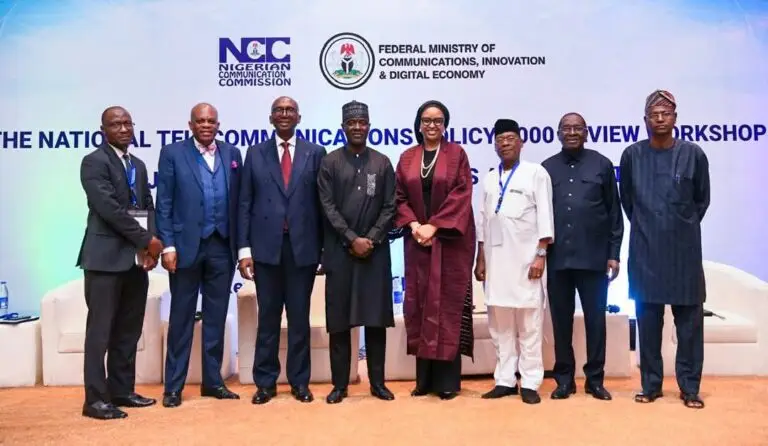







The Nigerian Communications Commission (NCC) has highlighted the importance of having a corporate governance framework in the telecommunications industry, stating that such a tool will not only ensure compliance, but also promote innovation, trust, and long-term value in the ecosystem.
Executive Vice- Chairman and Chief Executive Officer (EVC/CEO) of NCC, Dr. Aminu Maida, who disclosed this in his address at the recently held 2024 Annual Corporate Governance Conference in Lagos, affirmed that the concept remains the foundation for success and sustainability of the telecoms industry in Nigeria.
He described corporate governance as a veritable factor for success and sustainability in the important sector of the economy.
The theme of this year鈥檚 conference is, 鈥淐orporate Survival and Sustainability: The New Face of Governance.鈥�
According to him, the commission is about releasing its revised corporate governance code by updating the 2016 version, with a key focus on the introduction of mandatory sustainability reporting for telecoms operators in the country.
On the essence of sustainability reporting and Environmental, Social, and Governance (ESG) performance, the NCC boss explained that the initiative aims to align the sector with global ESG standards, promote greater transparency and support sustainable development within Nigeria鈥檚 telecoms space.
He also highlighted how sustainability reporting involves organisations to disclose information about their ESG performance.
This practice, he said, provides stakeholders鈥攊ncluding investors, customers, and regulators鈥攚ith insights into how telecoms operators manage risks and opportunities related to sustainability.
Maida stated that the key components include reporting on carbon emissions, resource usage, labour practices, community engagement, and data privacy.
Explaining the essence of sustainability in corporate governance, the EVC said: “Such practices are no longer optional, but essential for the long-term success of telecoms companies.
Maida stressed that in today鈥檚 fast-evolving world, corporate governance is not just a regulatory requirement, but the foundation of the telecoms industry鈥檚 success and sustainability.
鈥淎s leaders, it鈥檚 our responsibility to ensure our governance frameworks are robust, adaptable, and in tune with the changing global landscape,” he stated.
Underscoring the significance of good governance in the telecoms sector of Nigeria鈥檚 economy, Maida said NCC undertook comprehensive analysis on corporate governance among telecoms operators in Nigeria.
According to him, the major indicators examined in the survey include board composition, diversity, effectiveness, ethical conduct, compliance, risk management, and corporate social responsibility.
The analysis, according to the EVC, indicated a strong correlation between effective governance and regulatory compliance, with companies not excelling in governance facing poor financial performance.
“This observation demonstrates that good governance is not merely a regulatory obligation but a strategic necessity for sustainable business success,鈥� Maida asserted.
Aside expatiating on the correlation between effective governance and regulatory compliance in the industry, Maida further enumerated the essential components shaping the future of corporate governance in the telecoms sector.
These include adaptability as well as data privacy and security.
“As digital transformation and emerging technologies redefine the landscape, governance frameworks must adapt while ensuring accountability.
“With telecom operators handling vast amounts of sensitive data, robust data protection measures are imperative,” he noted.
Maida also warned that 鈥渄ata breaches could have dire consequences for both individual companies and the sector as a whole.鈥�
He equally stressed the need for 鈥済overnance frameworks鈥� that prioritise data security through comprehensive policies and compliance protocols in the ecosystem.
鈥淐orporate governance is not just a regulatory organisation; it is the foundation for the success and sustainability of our industry,” the EVC added.
He further highlighted the impressive growth of Nigeria鈥檚 telecommunications industry since its liberalisation in 2001.
鈥淔rom just 305,000 active phone lines in 2001, we now boast over 150 million active telecoms subscribers,鈥� the NCC boss added.
Maida reiterated the telecoms sector鈥檚 significant contributions to the country’s Gross Domestic Product (GDP) as well as job creation and economic empowerment for millions of Nigerians.