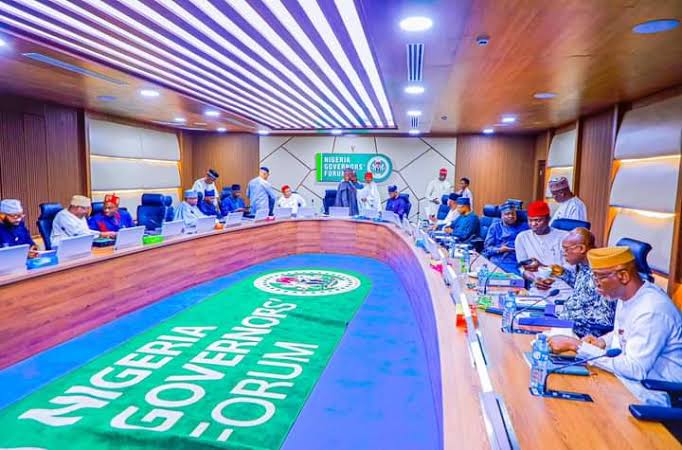







In a significant legal battle over the sum of N579.1 billion in stamp duty revenue, all 36 state governors have aligned with the Central Bank of Nigeria (CBN), the Attorney General of the Federation (AGF), and the School of Banking Hours Ltd/GTE (SBH) in an appeal against Kasmal International Services Ltd, a company owned by the late Senator Buruji Kashamu.
The appeal, filed on March 24, 2025, at the Court of Appeal, Abuja Division, is challenging the judgement delivered by Justice Inyang Ekwo of the Federal High Court, Abuja, on October 11, 2024.
The appellants, represented by an elite team of legal practitioners, are seeking to overturn the decision that awarded Kasmal International Services Ltd a staggering N579.1 billion plus 10% interest per annum.
According to the notice of appeal, the appellants argue that the trial court erred in law by determining the case via originating summons despite the existence of material disputes requiring oral evidence. They further contend that Kasmal lacked the legal standing (locus standi) to institute the case and that the judgement infringed on their right to fair hearing.
The appeal also disputes the claim that Kasmal was entitled to 15% of stamp duty collections and challenges the trial court鈥檚 reliance on a previous judgement (Exhibit KAS1), which the appellants claim did not confer any specific monetary entitlement to the company.
The case revolves around the collection and administration of stamp duties, a matter that has been contentious in Nigeria鈥檚 financial and legal landscape. The appellants assert that Kasmal International Services Ltd did not present any contract or documentary evidence proving its entitlement to the funds in question. They argue that the lower court鈥檚 decision was based on speculation and lacked proper legal grounding.
The legal team representing the appellants includes Senior Advocates of Nigeria (SANs) such as Prof. Yusuf Ali, Adebayo Adelodun, Yakubu C. Mikyau, and Kehinde K. Eleja. They maintain that the ruling of the Federal High Court, if upheld, would set a dangerous precedent in public finance management and undermine due process in revenue collection.
On the opposing side, Kasmal International Services Ltd, through its counsel, Dr. Alex Izinyon (SAN), argues that the company was legally entitled to the funds based on prior court rulings and agreements with government agencies. The company insists that the judgement awarded in its favour was sound and should be upheld.
The appellants contend that the judgement was fraught with legal errors, raising multiple grounds of appeal as follows:
1. Error in the use of originating summons: The trial judge erred in law by determining the case through an originating summons despite the presence of material disputes requiring oral evidence.
2. Lack of locus standi: The plaintiff (Kasmal International Services Ltd) lacked the legal standing to institute the case or claim the reliefs awarded.
3. Violation of fair hearing: The appellants’ interests were affected without being given an opportunity to be heard, violating their constitutional rights.
4. Misinterpretation of prior judgement (Exhibit KAS1): The trial court erroneously relied on a prior case that did not confer a monetary entitlement on the plaintiff.
5. Failure to prove claims: The plaintiff failed to establish its entitlement to the declaratory reliefs granted by the trial court.
6. Speculative award of funds: The judgement ordered the payment of N579.1bn without any contract proving Kasmal鈥檚 entitlement to a 15% commission or any percentage of the stamp duties collected.
7. Flawed assessment of plaintiff鈥檚 case: The trial court wrongly held that the defendants did not effectively controvert the plaintiff鈥檚 claims, despite clear legal and factual deficiencies.
The appellants are seeking an order from the Court of Appeal to strike out Kasmal鈥檚 case for incompetence or dismiss it outright on its merits. They also request that the judgement be set aside to prevent what they describe as an unjust and baseless financial obligation imposed on the states and federal agencies.