









By Oluwadare Taiwo
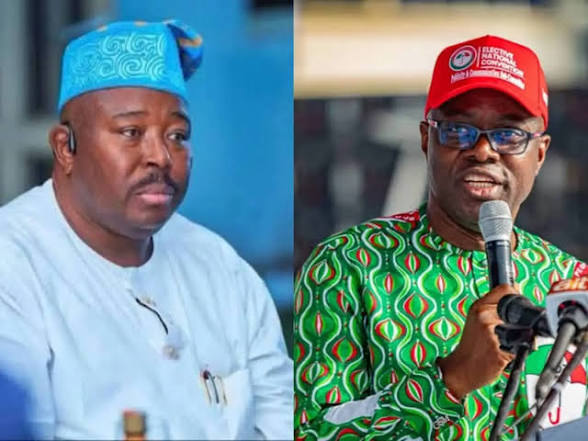
In a previous reflection, I examined the understated strength of Oyo State Governor Seyi Makinde, arguing that what many interpret as silence is, in fact, a deliberate governing asset. This follow-up extends that argument beyond calmness into a more complex trait that often escapes public scrutiny: strategic secrecy.
This is neither a partisan endorsement nor a critique of any political bloc. Rather, it is an attempt to interrogate a leadership pattern that many observers may be misreading in the current political climate.
Human behaviour is often explained through temperament theory, with the familiar classifications of sanguine, choleric, melancholic, and phlegmatic. Conventional wisdom tends to elevate sanguine and choleric personalities as natural leaders鈥攖he charismatic mobilisers and the forceful decision-makers. But governance, particularly in a volatile political environment, does not always reward visibility or aggression. If anything, it increasingly rewards restraint.
Phlegmatic personalities, often overlooked, operate differently. They are not driven by validation like the sanguine, nor by dominance like the choleric. Instead, they embody steadiness, patience, and quiet control. Like water, they do not force outcomes; they align with circumstances and gradually shape them. Water, after all, does not shout, yet it carves through rock over time. This metaphor provides an interesting lens through which to assess Makinde鈥檚 political trajectory.
During the administration of Abiola Ajimobi, several policies faced intense public resistance. Yet, in a twist that underscores the dynamics of leadership style, some of those same policy directions have been implemented under Makinde鈥攖his time with less friction and far less noise. The difference is not necessarily in the policy itself, but in the method of execution: less confrontation, more calibration.
Currently, Makinde faces political headwinds, from impeachment rumblings to perceived tensions with figures such as Nyesom Wike. To some, these developments suggest vulnerability or political retreat. But that interpretation may be premature.
Makinde once recounted a telling personal story on a BCOS programme: as a child, his quiet nature led his parents to assume he might struggle financially compared to his siblings. The expectation was that others would support him in adulthood. Yet the reality reversed鈥攈e became the one providing support. That anecdote is more than sentimental; it illustrates a consistent pattern: being underestimated, then outperforming expectations.
There is also an interesting parallel鈥攁lbeit interpretative鈥攄rawn from the double-slit experiment in quantum physics. The experiment demonstrates that particles can exist in multiple states, in superposition, until observed. While it would be a stretch to apply this literally to politics, the metaphor holds conceptual value: ideas, plans, and ambitions often retain their full potential when shielded from premature exposure.
Leaders who operate with a high degree of internal control often allow the appearance of uncertainty to persist while recalibrating behind the scenes. It is a form of strategic ambiguity鈥攁 refusal to reveal intent too early, thereby maintaining leverage.
In political terms, excessive visibility can invite disruption. Secrecy, when used strategically, preserves optionality. This may partly explain why Makinde has remained measured鈥攅ven guarded鈥攐n critical decisions, including the much-anticipated question of succession. In a political culture that rewards immediacy, his delay is being interpreted by some as indecision. But for leaders of this disposition, delay is often diagnostic鈥攁 period of observation, alignment, and timing.
Patience, in this context, is not passivity; it is method.
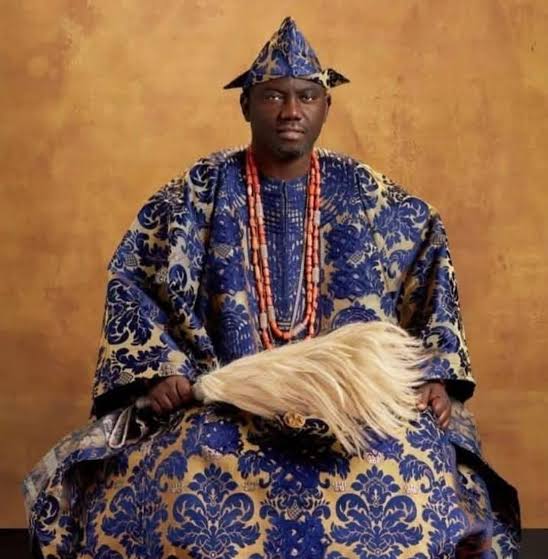
However, an interesting dynamic emerges when similar traits exist in competing power centres. The Olubadan of Ibadanland, Rashidi Ladoja, is also widely regarded as a figure of restraint and strategic depth. When two actors with comparable temperaments operate within the same political ecosystem, the contest is no longer about speed or noise; it becomes a subtle game of anticipation and outmanoeuvring.
The coming months may, therefore, offer a study in quiet power鈥攏ot the loud, theatrical variety, but the kind that unfolds gradually, often unnoticed until outcomes are already determined.
Ultimately, Makinde鈥檚 leadership raises a broader question: in a political culture saturated with visibility and rhetoric, are we overlooking the effectiveness of those who choose to operate differently?
Silence, it appears, is only the surface. Beneath it may lie calculation, patience, and a disciplined approach to power that is far more consequential than it first appears.