Akinwande Soji-Ojo
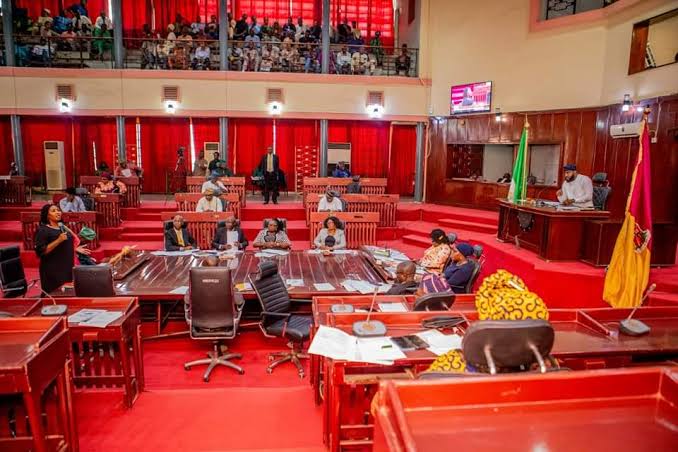
In a dramatic session marked by tension and disagreement, the Oyo State House of Assembly on Tuesday passed the Oyo State Council of Obas and Chiefs (Further Amendments) Bill 2025, retaining the controversial rotational chairmanship clause and expanding the membership of the Council.
The amendment, which followed the bill’s third reading and presentation by the Vice Chairman of the House Committee on Local Government, Chieftaincy Matters, and State Honours, Hon. Bamidele Adeola, solidifies a two-year rotational chairmanship among the Alaafin of Oyo, Olubadan of Ibadanland, and Soun of Ogbomoso.
Lawmakers say the move is aimed at promoting unity, balance, and inclusive governance among the state鈥檚 foremost traditional rulers.
In addition to the rotational chairmanship, the council’s membership has been expanded from 35 to 41, accommodating more traditional rulers from across the state. Newly added members include the Olu of Igboora, Onilala of Lanlate, Alado of Ado-Awaye, as well as rotating representatives from other local governments.
The amendments also introduced provisions for deputy and vice chairmanship positions, with leaders such as the Eleruwa of Eruwa, the Olugbon of Orile-Igbon, and the Aseyin of Iseyin occupying key roles under the new structure.
Speaker of the House, Rt. Hon. Adebo Ogundoyin, described the passage as a significant step toward strengthening the council鈥檚 operations and fostering inclusive representation in Oyo鈥檚 traditional institution. He reaffirmed the assembly鈥檚 commitment to preserving tradition while encouraging progressive leadership.
However, the session was not without controversy as lawmakers from Oyo zone, particularly Hon. Gbenga Oyekola (Atiba) and Hon. Olorunpoto Cephas (Oyo East/West), staged a walkout in protest.
Trouble began when Olorunpoto raised concerns about alleged side meetings during the plenary, accusing some members of turning the assembly into a “family meeting” that sidelines Oyo representatives.
Oyekola expressed deep dissatisfaction, stating that the bill disrespects the revered Alaafin stool and undermines the history of Oyo town. He argued that the move was a political gang-up against Oyo zone and warned of rising tensions in his constituency.
鈥淚 cannot be part of altering an age-long history just to satisfy political interests,鈥� he said before exiting the chamber.
Olorunpoto also condemned the amendment as an attempt to 鈥渞ewrite history鈥� and walked out in solidarity, saying he would not be part of what he considered a betrayal of Oyo heritage.
The walkout came amid growing resistance to making the Alaafin the permanent chair of the council, a plan which had previously drawn criticism from key stakeholders across the state.
Stakeholders including Mogajis from Ibadan and Ogbomoso had publicly opposed the idea, insisting on a rotational leadership structure that reflects the diversity of Oyo鈥檚 traditional system. Their stance appears to have influenced the final decision of the assembly.
In the aftermath, the lawmakers were widely praised for embracing inclusivity and upholding democratic values within the traditional council system. Community leaders described the development as a victory for fairness, shared governance, and unity in Oyo State.