






Akinwande Soji-Ojo
The Lagos State House of Assembly is currently embroiled in a significant leadership crisis that may have far-reaching implications for the All Progressives Congress (APC) as it approaches the 2027 general elections. This turmoil not only threatens the internal cohesion of the party, but also raises questions about its future dominance in Lagos politics.
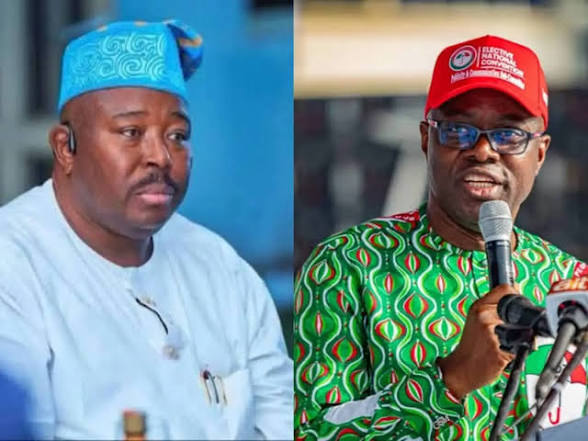
The crisis escalated dramatically on February 17, 2025, when security operatives, including the Department of State Services (DSS) and the Nigeria Police Force, sealed off the assembly complex. This action was reportedly in response to a contentious leadership tussle that saw the emergence of two rival Speakers following the impeachment of former Speaker, Mudashiru Obasa, on January 13, 2025. The assembly’s premises were locked, and access to the chambers was restricted, leading to heightened tensions among lawmakers and the public.
In a bold move, the impeached Speaker, Obasa, accompanied by armed security personnel, forcibly entered the assembly complex on Thursday, broke the locks to the Speaker’s office and chambers, and presided over a four-member plenary session. This act of defiance further deepened the divide within the assembly, as majority of the lawmakers had previously passed a vote of confidence in the new Speaker, Mojisola Meranda.
The involvement of security agencies in the assembly’s affairs has drawn widespread condemnation. Former Vice President Atiku Abubakar described the invasion as “utterly reprehensible and a significant threat to Nigeria’s democratic values.” He also insinuated that President Bola Tinubu might be interfering in state matters, urging him to respect the autonomy of state institutions.
This internal discord within the Lagos State House of Assembly has exposed deeper cracks within the APC’s power structure in the state. The once-cohesive political mechanism now appears fragmented, with various factions vying for control. Critics argue that the Governance Advisory Council (GAC), the apex decision-making body of the APC in Lagos, has become divided and less effective in managing the party’s internal disputes.
As the 2027 general elections approach, the APC’s internal strife could have significant electoral consequences. The party’s dominance in Lagos State may be challenged if these issues remain unresolved. Political analysts suggest that the opposition could capitalise on the APC’s internal divisions, presenting a united front to sway voters dissatisfied with the current state of affairs.
In response to these challenges, some APC stakeholders have begun mobilising efforts to strengthen the party’s grassroots support. For instance, a political pressure group, known as Itesiwaju Mainland, was inaugurated to mobilise voters ahead of the 2027 elections in the Mainland area of Lagos State. This initiative aims to reinforce the party’s presence and address any disenchantment among the electorate.
However, internal efforts may not suffice if the leadership crisis persists. According to one of the party’s chieftain, Babatunde Bank-Anthony, the APC must address the root causes of the discord within the Lagos State House of Assembly to restore public confidence. “This includes fostering transparent communication among party members, ensuring adherence to democratic principles, and refraining from undue interference in legislative matters,” he said.
The outcome of this crisis will likely serve as a litmus test for the APC’s ability to maintain its stronghold in Lagos State. A failure to resolve these internal conflicts could embolden opposition parties and alter the political landscape ahead of the 2027 general elections. Conversely, a successful resolution could reinforce the party’s image as a unified and resilient political force.
Bank-Anthony emphasised that for APC to maintain its dominance, it must resolve internal divisions and uphold democratic integrity, as these are crucial to sustaining its stronghold in Lagos State.
In conclusion, the ongoing leadership crisis in the Lagos State House of Assembly presents a critical challenge for the APC. The party’s response to this turmoil will significantly influence its prospects in the upcoming 2027 general elections.