A new report by the International Telecommunications Union (ITU) has ranked Nigeria high in its readiness for digital transformation, with a score of 71 per cent.
The report, conducted in collaboration with the United Kingdom鈥檚 Foreign, Commonwealth and Development Office, evaluated countries鈥� legal, policy, and governance frameworks towards achieving an advanced state of digital transformation, known as G5.
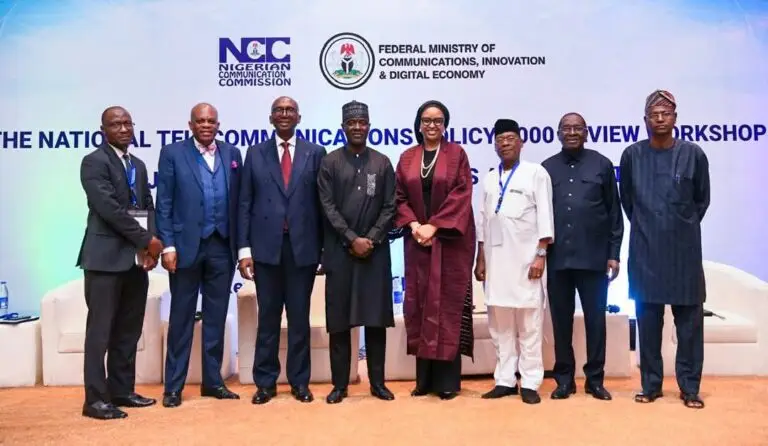
According to a statement by the Nigeria Communications Commission (NCC) Director of Public Affairs, Dr Reuben Muoka, the report was unveiled by Minister of Communications, Innovation, and Digital Economy, Dr. Bosun Tijani, in Abuja.
The report, titled, 鈥淐ollaborative Regulation: Accelerating Nigeria鈥檚 Digital Transformation,鈥� presented a case study for a collaborative regulation review to assess and support Nigeria鈥檚 transition towards collaborative digital governance, evidence-based policymaking and agile regulation in the digital economy.
Nigeria鈥檚 ranking places it among the top seven countries in Africa, alongside Germany, Finland, and Singapore, which lead the global chart.
The report also ranked Nigeria high in the BEMECS 5G Readiness Index, indicating the country鈥檚 readiness to deploy and adopt mass-market 5G networks.
Tijani, in his remarks at the event, commended ITU, partner agencies and consultants that actualised the report and expressed Federal Government鈥檚 commitment 鈥渢o utilise this report as a navigational aid towards the attainment of our regulatory objectives and policy outlines toward achieving a robust digital economy.”
鈥淭hat is what we will continue to do as a government, ensuring that we can put ourselves in a place to have cutting-edge modern regulations in place to ensure that business is done properly in our sector and to ensure that, where possible, increase the local content of the sector as well,鈥� he added.
The minister noted that NCC has adapted over the years in response to how its role and mandate have changed.
鈥淔ifteen, twenty years ago, NCC was just regulating the telecommunications sector; today, NCC regulates the foundation for which any economy would be prosperous,鈥� Tijani said.
The report, which was presented to a cross-section of key industry stakeholders, including service providers, government agencies, representatives of multilateral institutions, the West Africa Telecommunications Regulators Assembly and the Africa Telecommunications Union, among others, was also designed to complement existing cross-country benchmarks in which features of countries’ policies and regulatory environments are assessed.
The features of countries鈥� policies and regulatory environment are assessed according to the pillars of the generations of regulation frameworks that track telecoms regulatory maturity towards digital transformation readiness, designated at the G5 Advanced State of Readiness, for which Nigeria currently stands at G4.
鈥淣igeria鈥檚 advanced state of readiness for digital transformation is benchmarked against four critical levels of accomplishments, which include national collaborative governance, policy design principles, the digital development toolbox, and the digital economic policy agenda.
鈥淭he country鈥檚 scores across these benchmarks are impressive, with notable highlights including 91 per cent in Regulatory Capacity, 82 per cent in Market Rules, 81 per cent in collaborative governance, 76 per cent in Legal Instruments for ICT/Telecoms markets, and 69 per cent in National Digital Agenda Policy,鈥� the report stated.
The Executive Vice Chairman of Nigerian Communications Commission (NCC), Dr Aminu Maida, who hosted the presentation, welcomed the indicators that promote effective regulation, attraction of greater investment and development of innovative models for broader digital inclusion.
He emphasised that collaborative regulation would support Nigeria鈥檚 transition towards effective digital governance, evidence-based policymaking, and agile regulation in the nation鈥檚 digital economy.