





By Emmanuel Adeleke
The Independent National Electoral Commission (INEC) has announced dates for the conduct of the governorship elections in Ekiti and Osun States.
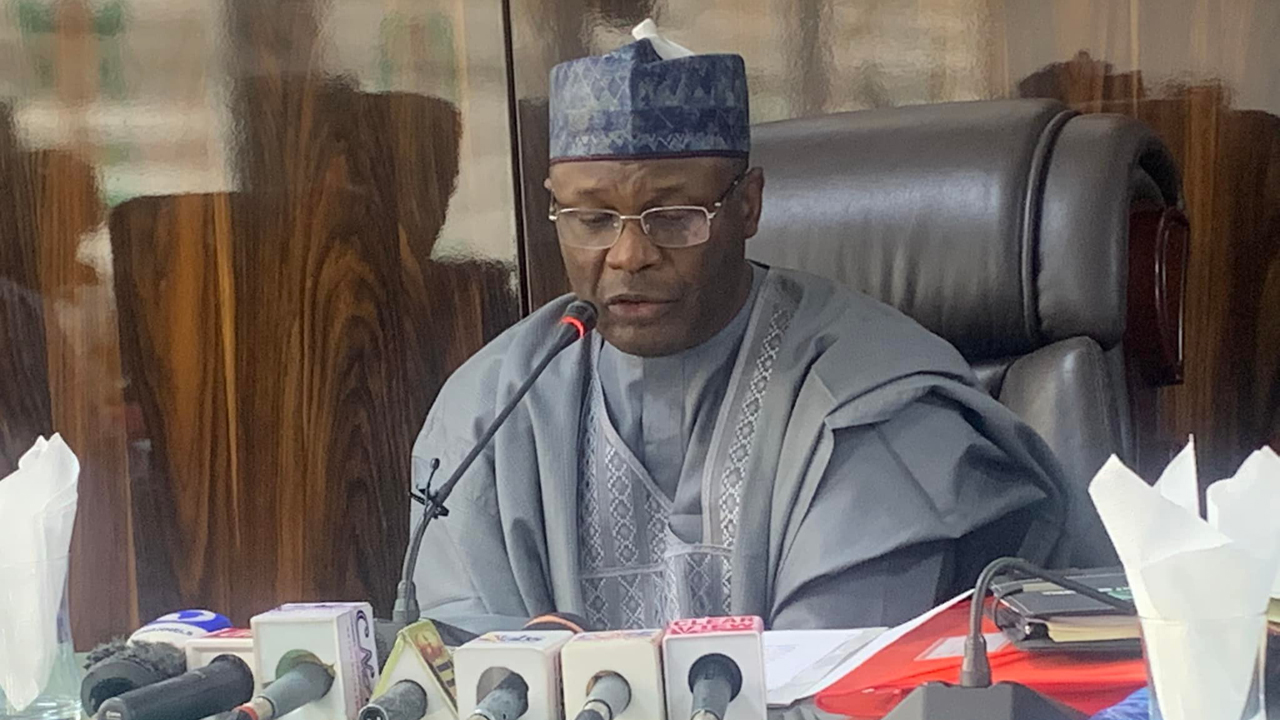
INEC Chairman, Professor Mahmood Yakubu, who disclosed the dates during the swearing in of six newly appointed Resident Electoral Commissioners (REC) in Abuja on Friday, said the elections would hold on June 20 and August 8, 2026, respectively.
Yakubu recalled that the last governorship elections in the two states were held in June and July 2022, respectively, noting that his announcement was in line with the requirements of the law, which made it mandatory for the commission to publish the notices for major elections not later than 360 days before the date fixed for the election.
鈥淔or Ekiti State, the election will be held on Saturday, June 20, 2026. However, party primaries will start on October 20, 2025 and end on November, 10, 2025 to enable political parties to upload their nomination forms to the dedicated portal, which automatically shuts down by 6 p.m. on December 22, 2025 i.e. not later than 180 days before the election.
鈥淭he final list of candidates will be published on January 12, 2026, while the campaign in public by political parties will commence on January 21, 2026 and end 24 hours before election day.
鈥淚n the case of Osun State, the election will be held on Saturday, August 8, 2026. Party primaries will start on November 24, 2025 and end on December 15, 2025. The portal for the upload of nomination forms by political parties closes at 6 p.m. on February 9, 2026 i.e. not later than 180 days before the election. The final list of candidates will be published on March 9, 2026 while the campaign in public by political parties will commence on March 11, 2026 and end 24 hours before election day,鈥� he said.
The INEC chairman had earlier urged the six newly sworn-in RECs to conduct themselves in line with their oath of office.
“As you assume or resume duty, I urge you to focus on your responsibilities. Let me make it clear from the outset that you must at all times be guided by the electoral legal framework, the code of conduct for RECs, as well as the regulations and guidelines governing the commission鈥檚 operations.
鈥淎bove all, you must always act in good conscience. Do not betray your oath of office. In the best tradition of the commission, you must engage with stakeholders through regular consultative meetings and must not be impervious to genuine criticisms.
鈥淚n the various states to which you will be deployed shortly, you will be in charge of personnel and resources. Manage your personnel and the extremely limited resources at your disposal very well. Your appointment is a full-time and not a part-time responsibility.
鈥淵ou must provide leadership and exercise effective supervision. You can only succeed in this responsibility when you are knowledgeable about the commission鈥檚 activities, particularly the innovations introduced in election management.
鈥淚t is also important to understand and operate within the limits of your delegated powers and responsibilities. Our state offices are part and parcel of the commission.
鈥淵ou must never act independently or think that you can act in violation of the law, regulations and guidelines or defy the commission without consequences. We will hold you accountable for your actions and inactions. We will not hesitate to deal with acts of defiance, indiscretion or transgression on the part of any Resident Electoral Commissioner,” he said
The new RECs, who have been deployed to states, include Dr Sa鈥檃d Umar Idris (Gombe), Dr. Johnson Alalibo Sinikiem (Cross River), Mrs. Feyijimi Saseyi-Ibiyemi (Ogun),Mukhtar Umar Gajiram,(Taraba), Chukwuemeka C. Ibeziako (Abia) and Umar Yusuf Garba (Sokoto).
Two of the RECs, Sinikiem and Gajiram, were reappointed for a second term, having served an initial term of five years.