









By Efa Sunday
The International Institute of Tropical Agriculture (IITA) has renewed its commitment to advancing food security and agricultural transformation in Nigeria through stronger research partnerships and coordinated action with the United Nations.
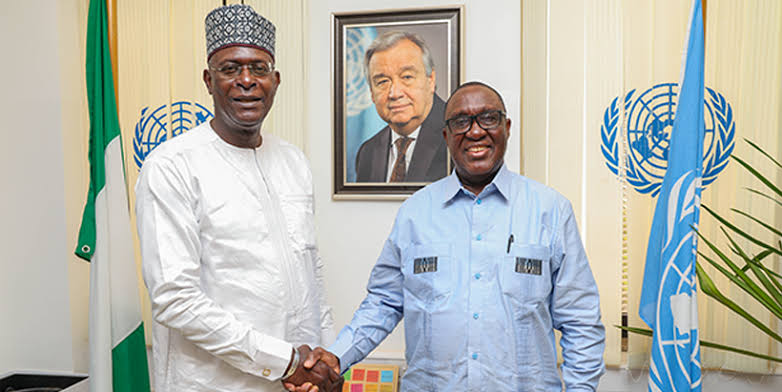
The move follows a high level mission to Abuja where the Director General of the International Institute of Tropical Agriculture and CGIAR Regional Director for Continental Africa, Dr Simeon Ehui, met with the United Nations Resident and Humanitarian Coordinator for Nigeria, Mr Mohamed Malick Fall, to explore new areas of collaboration.
Ehui outlined some of the major breakthroughs the institute has recorded in improving Africa鈥檚 agrifood systems. He highlighted interventions that have tackled challenges in soil health, improved seed varieties, and plant health solutions. He also pointed to successful technologies such as the award winning Semi Autotrophic Hydroponics innovation which enhances crop multiplication and boosts productivity for farmers.
According to him, the greatest challenge remains taking these breakthroughs beyond the laboratory and into the hands of farmers nationwide. He said this requires solid partnerships with strategic institutions like the United Nations to ensure Nigeria and the rest of Africa become food sufficient.
鈥淔or us at the International Institute of Tropical Agriculture, the real issue is scaling. We have many proven solutions, but we must deliver them at a level where they can make the biggest difference. We are ready to deepen our engagement with the United Nations and other partners to support farmers and transform our food systems,鈥� Dr Ehui noted.
Speaking during the meeting, Fall reaffirmed the United Nations commitment to support Nigeria in achieving sustainable agricultural development and economic growth. He described agriculture as the strongest driver of transformation for the country if the right investments are made.
鈥淭his meeting has been very important. We want to build a strong bridge of cooperation with the International Institute of Tropical Agriculture because agriculture is key to the economic future of Nigeria,鈥� he said.
Both parties expressed a shared vision to deploy science driven and inclusive solutions that enhance resilience, empower young agripreneurs, and improve livelihoods for rural communities across the continent.