






Stakeholders in Ibadan have called for the urgent implementation of a comprehensive development blueprint tagged “Ibadan 4.0,� warning that the ancient city risks stagnation without deliberate reforms focused on job creation, infrastructure renewal, and coordinated growth.
The call formed the core of deliberations at the 2026 Ibadan Conference organised by the Central Council of Ibadan Indigenes (CCII) in honour of the Olubadan of Ibadanland, Oba Rashidi Adewolu Ladoja (Arusa I).
The conference, held at Bode Amao Hall, Ibadan House, Oke-Aremo, brought together traditional leaders, academics, professionals, and policymakers under the theme: “Ibadan: Remembering Our Past, Understanding Our Present, Designing Our Future.�
Chairman of the occasion and Pro-Chancellor, Abiola Ajimobi Technical University, Ibadan, Dr Adesola Adeduntan, described the “Ibadan 4.0� agenda as a critical shift from rhetoric to deliberate and coordinated development action, cautioning that the city’s future depends on collective commitment and proper planning.
“Ibadan is not just a city; it is a civilisation built on structure, discipline, and communal responsibility. But great cities do not drift into greatness. They are built deliberately, renewed deliberately, and coordinated deliberately,� he said.
He stressed the need for a shared vision, noting that fragmented initiatives and uncoordinated ambitions have continued to slow progress.
“The future will not be secured by isolated actions. It will come when there is cohesion, alignment, and a shared commitment to a common vision,� Adeduntan added.
Delivering the keynote address, Guest Speaker and Vice Chancellor, Summit University, Offa, Kwara State, Prof. Abiodun Aibinu, said Ibadan is at a “critical turning point� and must transition to a knowledge-driven economy anchored on innovation, skills development, and institutional collaboration.
“Ibadan’s future will not be built by government alone. It requires deliberate cooperation among institutions, communities, and a global network of its people,� Aibinu said.
He identified unemployment, weak infrastructure, and declining social services as major threats to sustainable growth, warning that failure to address them could deepen inequality and hinder development.
“The immediate priorities are clear — employment and livelihood stabilisation, infrastructure improvement, and skills development. Without these, the vision of Ibadan 4.0 will remain theoretical,� he added.
Aibinu further advocated urban renewal, revitalisation of educational institutions, and a transition from a resource-based economy to a knowledge-based system driven by innovation and human capital.
He also called for stronger grassroots governance, recommending the integration of traditional structures such as the Mogaji system into formal governance frameworks to enhance accountability and community coordination.
Earlier, Chairman of the Ibadan Cultural Festival Planning Committee, Alhaji Moshood Akere, said the introduction of the conference into the annual festival was aimed at deepening policy dialogue and encouraging forward-looking discussions.
“Since 1990, this festival has served as a platform for cultural expression and reunion. This conference ensures that we also engage in honest conversations about Ibadan’s future,� he said.
He added that the event also honoured Oba Ladoja, whose leadership he described as a bridge between Ibadan’s historical legacy and its modern aspirations.
Dignitaries at the event included the President-General of the CCII, Chief Sulaimon Ajeniyi Ajewole, alongside other prominent indigenes and stakeholders.
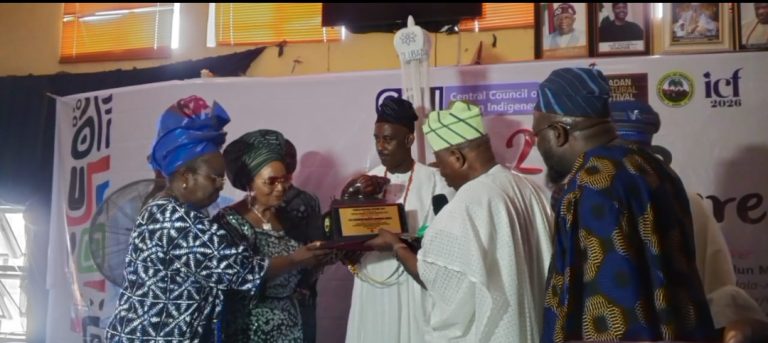
A major highlight of the conference was the presentation of awards to distinguished personalities, including Ambassador Florence Ajimobi, Adeduntan, Aibinu, Otunba Oluseye Opatoki, and Otunba Saheed Makinde, in recognition of their contributions to the growth and development of Ibadanland.



