African leaders have been urged to dismantle trade barriers stifling their individual countries, in a bid to ensure smooth flow of goods and services, with a corresponding impact on economic growth and development across the continent.
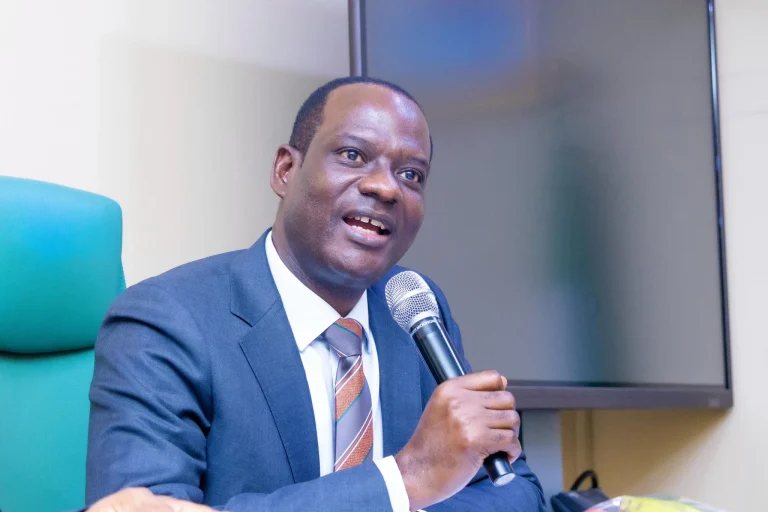
The call was made by the Group Chief Commercial Officer of Dangote Industries Limited, Mr Rabiu Umar, during an interview aired on The Morning Show, a breakfast programme on Arise Television, on the sidelines of the just-concluded Intra-African Trade Fair (IATF), held in Durban, South Africa.
Rabiu, who represented the Dangote Group, a platinum sponsor of the trade fair, also called for reforms at various ports across Africa.
“Bringing down these barriers will mean that goods and services can move much more freely on the continent from one country to another,” he noted.
He advocated improved infrastructure across Africa to promote regional integration, as well as the ease of regulations and bureaucracy that prevented free flow of trade across the continent in order to realise the benefits of the African Continental Free Trade Area (AfCFTA) agreement.
Calling for enforcement of the Rules of Origin enshrined in the agreement, Rabiu also canvassed for 80 per cent of components of manufactured products to be sourced from Africa to avoid dumping of goods from foreign countries. He noted that there was a renewed interest in the Dangote Group and Nigeria from other African countries at the fair.
Highlighting the benefits of the AfCFTA and its impact on manufacturers like the Dangote Group, he said: 鈥淭he trade barriers highlights a lot of issues around infrastructure, around diplomacy, around ports. For example, if you take the port situation, you may get your goods to the port and it takes such a long time. If I give the example of Nigeria to get them out of the country or into the country.*
鈥淚 was on a panel here and someone from South Africa said it鈥檚 cheaper to move goods from Durban to China than from Durban to Cape Town. So, the challenges are not just related to a particular region, they鈥檙e all across Africa,鈥� Rabiu added.
Speaking on the renewed interest in Nigeria at the IATF meetings, with particular focus on Dangote Group, Rabiu said: 鈥淚 think what has been impressive is the level of interest. From across the continent, many countries come in to find out what we do, trying to either sell us a solution or try to buy something from us. I mean, we鈥檝e had people from all over.鈥�
Speaking about the scope of operations of the Dangote Group, he stated that: 鈥淲e have presence in 10 countries, like I said, including South Africa. So, we had people come in, who are in South Africa to ask to do business with us. We have had people who want to know about our fertiliser business, for example, and all sorts and of course, the famous refinery. People are interested in finding out more and how they can collaborate and do business with us. So, it鈥檚 been a worthwhile trip so far.鈥�
Responding to a question on how to boost Intra-African trade, Rabiu proffered vital tips like fixing infrastructure, tariff reduction, ease of payments and settlements as the top priorities.
鈥淚t鈥檚 a very difficult process. It is not just about the road transport or the quality of the roads you have. We don鈥檛 have a rail system and of course, you know, road transportation is very expensive. The second part is the tariffs, the systems and the process, the bureaucracy.
鈥淪o for us to get to where we need to get to, I think the key condition is to remove these barriers to trade, the biggest one being infrastructure.You need the infrastructure to move goods across the second part of it, you need to cut out the red tape, from a diplomatic perspective, from a customs perspective, or from even a payment settlement perspective. This is one of the things the Afreximbank has done with the settlement system among the African countries, meaning that you are kind of dollarising the economies of these countries,鈥� he said.