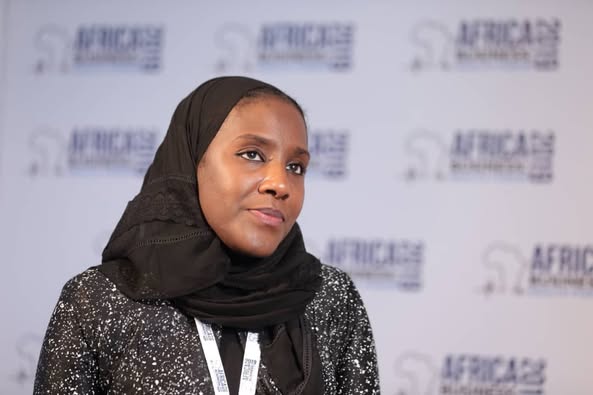










Group Executive Director of Dangote Industries Limited (DIL), Halima Aliko-Dangote, has said family-owned businesses (FOBs) contribute significantly to the global economy in ways that are often overlooked.
Halima stated this during a panel session, tagged, 鈥楩amily Business: Looking at the Next Frontier,鈥� at the Forbes Global CEO Conference in Bangkok, Thailand.
Halima explained that FOBs have demonstrated exceptional resilience, navigating challenges and thriving over multiple decades.
She stressed that success in FOB starts with shared values, goals, governance policies and alignment, adding that reputation is a component of 鈥渇amily capital.”
According to her, governance structure, adherence to core values, customer satisfaction, optimisation of shareholder value, meritocracy, integrity, leadership, brand equity, diversification and growth, philanthropy and preserving generational wealth 鈥減lay crucial roles in the success of our businesses.鈥�
She said Dangote Group鈥檚 governance policies do not allow the board and management to operate in isolation as each business unit has at least three independent directors who give a holistic view.
鈥淲e family-owned businesses have to stick to our tradition of asset rich-cash moderate or as my father will correct me, asset rich-cash poor. We as Dangote perpetuate a profitable business with strong values and strong governance structure.
鈥淲e make money while building our nation by contributing heavily to the global economy, creating massive jobs, thinking of our great grandkids and contributing excessively to humanity,鈥� she said.
Highlighting the contribution of FOBs to the global economy, Halima said studies by Mckinsey showed that they account for more than 70 per cent of global gross domestic product (GDP), generate annual turnovers of between $60 trillion and $70 trillion, and provide around 60 per cent of global employment.
She stressed the crucial role the businesses play in sustaining communities and driving development in sectors such as manufacturing, education, healthcare, and infrastructure across the globe.
Halima said FOBs often employ two key approaches in preparing the next generation for leadership roles including internal and external capacity building.
Regarding internal capacity building, Halima said many families create internship programmes for young family members interested in taking over the business or assuming leadership positions.
鈥淚n Nigeria, we train the next generation so they can grow organically to leadership roles in family businesses. My dad鈥檚 approach is for you to start from ground up knowing you will get to leadership role if you work hard and do your job right.
鈥淭hese experiences make it easier for you to learn the ropes and be prepared for leadership role in the future,鈥� she said.
On external capacity building, she said it entails the practice of sending younger generations to work in non-family businesses.
鈥淭his approach enables them to acquire new skills, learn better processes, and gain diverse perspectives that can benefit the family business in the long run,鈥� Halima said.
The approach, she explained, 鈥渞emoves the familiarity tag as the young generation got employed as other people and supervised to monitor their performance.鈥�
Other speakers include Managing Director and CEO of Worldwide Hotels, Carolyn Choo; Managing Director of Damen Yachting, third-generation family shareholder of Damen Shipyards Group, Rose Damen; and Caroline Link, Co-Chairman of B.GRIMM Pharma, President of B. Grimm Joint Venture, and Board Member of B. Grimm Power.