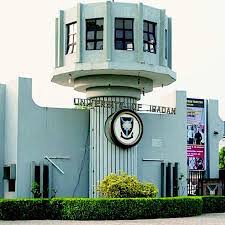
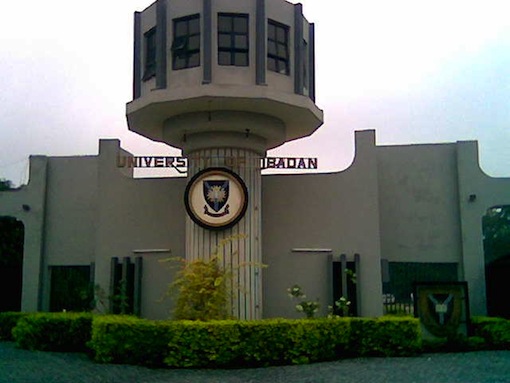
In the 2021 Times Higher Education (THE) World University Rankings, the University of Ibadan (UI), for the first time since 2016 when it started featuring in the ranking exercise, made a huge leap forward in global educational reckoning. It came in 401-500 bracket. In a ranking that featured top universities from North America, Europe and Asia in the top bracket, this new ranking slot makes UI the best university not only in Nigeria but also in West Africa, and among the best in Africa. We may not understand the significance of this achievement until we track its performance for the past six years. In 2016 when UI entered THE global academic ranking, it was in the 601-800 slot. In 2017, it featured in the 801+ reach. It slid into the 801-1000 space in 2018. It then regained the 601-800 slot in 2019. In the 2020 ranking exercise, it significantly improved its performance and was placed in the 501-600 category. This new ranking therefore demonstrates not only a first for UI, but a consistent attempt to reach for the sky in academic performance.
Global academic ranking constitutes a universal metric by which higher education is measured for qualitative performance and improvement over time. This is to be expected, as a global need, due to the fundamental significance of education in national development. Higher education is saddled, most especially, with the responsibility of preparing the human capital requirement that each state needs to satisfy objective of infrastructural development and national productivity. The Time Higher Education ranking methodology deploys five performance indicators: teaching, research, citation, international outlook and industry income. In teaching, UI scored 21.4. Research gave her 12.2. In citation, she scored her highest point of 88.5, while international outlook yielded 30.9. In industry income, UI got 34.0. These scores gave UI a huge edge over Lagos State University (501-600), University of Lagos (601-800), Covenant University (801-1000) and University of Nigeria, Nsukka (1001+).
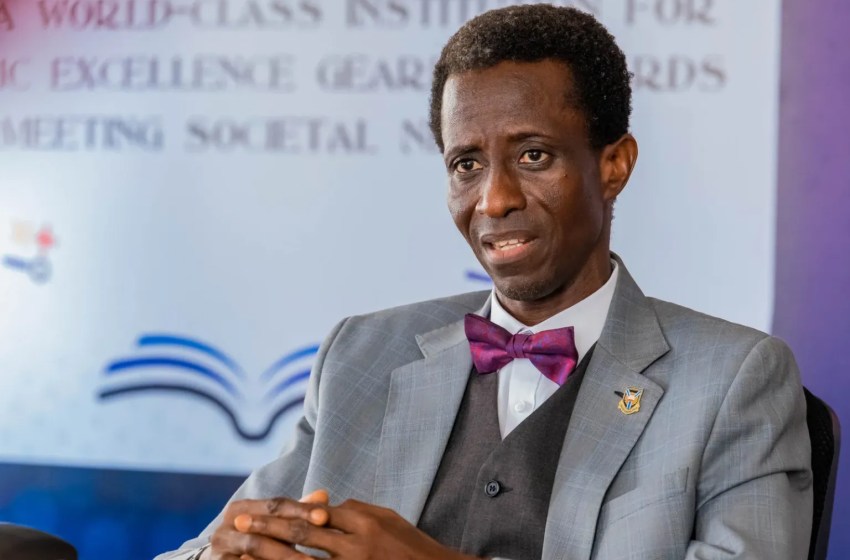
In Africa as a whole, the leading universities are in South Africa: University of Cape Town (155), University of Witwatersrand (201-300), Stellenbosch University (251-300), and the University of KwaZulu-Natal (351-400). This fact is interesting because Nigeria and South Africa are not only regional neighbours and friends, but also socioeconomic competitors for the status of the most viable state on the continent. That South African universities are ranked higher than Nigeria鈥檚 speaks to the need to do more in terms of critical investment in education and the education system. That UI manages this huge leap forward in the ranking of her academic performance speaks volume about the cumulative and ongoing reform efforts of the past helmsmen of the university, and especially, the sustained driving energy of the incumbent Vice Chancellor, Professor Abel Idowu Olayinka. We really do not need a narrative from these administrators, both in UI and those others who are equally struggling against the odds and the current.
The Nigerian higher education space is a deep reflection of the governance climate in Nigeria. Both are proportional soulmates. They are directly proportional to each other. At the moment, a decrease in governance is having a most negative effect on the quality of higher education. The consequence is that the quality of human capital development inevitably also drops abysmally. The COVID-19 pandemic has further exposed the gross deficit that characterize Nigeria鈥檚 education system, especially the universities. ASUU has been on strike since the lockdown commenced. And at least we have the union to thank at least for an understanding of the terrible state of higher education in Nigeria (if not for anything else). Recently, a post made the rounds of WhatsApp platforms. It contains a 62-point litany of institutional woes about Nigerian universities, their academic deficits, governance failure, infrastructural decline, and administrative debilities. These are facts and figures that are depressing: (a) internet services are non-existent, or epileptic and slow in 99% of Nigerian universities; (b) Nigerian universities鈥� libraries are outdated and manually operated; (c) in terms of development projects in Nigerian universities, 23.3% (163) are abandoned and 76.7% (538) are perpetually ongoing; (d) 80% of Nigerian universities are grossly understaffed; (e) 88% of these universities have under-qualified academics; (f) the teaching staff to student ratio in Nigerian universities are very high; (g) there is no significant relationship between university enrolment and the manpower needs of Nigeria. And the tale of woe continues.
And yet, one wonders how some universities like UI and the others struggling to reach the height of global visibility were able to make it in a crippling environment. Governance is supposed to be the lifeblood of higher education. And this is justified because higher education, in turn, is the life blood of national development for any state. However, for a long time, budgetary allocation to education in Nigeria has remained consistently paltry. From 2009, the allocation has wavered between 7 and 8 percent of the budget. The highest was in 2014 when education got 9.94%. Apart from the relationship of higher education to the governance and policy dynamics of the Nigerian state, there is also the relationship of higher education to the societal demands for it. This demand, to all intents and purposes, exceeds the capacity made available by the tertiary institutions. One reason for this is that Nigeria has become a certificated society where almost everything depends on the certificate you are able to acquire, even if those certificates lack the skill and competence content. A story for another time. So, access to tertiary institutions becomes a critical issue. But so also is quality as some of the data above revealed. There are just not enough professional staff to deliver on the required qualitative education needed for a competent manpower source for critical development. And funding goes right to the heart of the strike action that has become ASUU鈥檚 methodology over the years. All these three fundamental issues put together determine the quality of performance of the universities, and the outputs in terms of graduates and research that could feed into infrastructural and industrial productivity of the Nigerian state.
And it is within this debilitating context that we really need to look beyond just the ranking of Nigerian universities, to the significance of the ranking for our developmental efforts, and the opportunities it presents to rethink our higher education dynamics. Ranking speaks to achievements, but it also speaks to the need for more reform to be able to advance more in the league of the best universities across the world. The government can no longer ignore the individual but strenuous achievements of those universities ranked. And neither can it any longer play the ostrich in terms of the damage that bad governance is wreaking on higher education. And there are so many reform insights that have the potentials of transforming Nigeria鈥檚 higher education system, if only the government will be willing, through the NUC, to muster the political will to launch the reform.
Governance is key to all transformation of the universities anywhere. And here, I reference the internal governance dynamics of each of the universities. And these are constituted by the governing councils of each university. Government鈥檚 interest in instigating the quality designation and output of the universities could be demonstrated through the constitution of governing councils of excellence (GCoE) in one designated university in each of the six geopolitical zones of Nigeria. The membership will be made up of those with proven professional competence and records of service to Nigeria. This is cogent because membership has hitherto been on the basis of political membership and clientelist orientation. The GCoE of the designated university has the responsibility to hold the university to a standard of academic and administrative performance worthy of high ranking and productive interface with the national economy.
A correlate reform insight has to do with the creation of a competitive space for universities that will be motivated by, say, an innovation fund that any innovative university can draw on, based on specially designed criteria. TETFUND (underutilized though, due to capacity deficit) is an existing funding entity that could be expanded and rehabilitated with this objective in mind. The establishment of such an innovation fund instigates universities, through their GCoE, to fabricate strategic plans that will be the occasion for serious funding. The viability of a university鈥檚 strategic plan and innovative ideas becomes the first condition for winning the huge funding and grants from the innovation fund. And such strategic plans must factor in the relationship of the university to the national economy. This is the third reform insight that can transform higher education dynamics in Nigeria. As the Times Higher Education ranking methodology indicates, the university-industry linkage is a significant criterion for measuring research relevance globally. And what best way to be innovative than by factoring such strategic linkages into the university plans? The university-industry linkage recognizes not only that research feeds into the larger societal imperatives, but also that university funding is not the responsibility of the government and the university alone. Industries also have interests in cutting edge researches.
The COVID-19 pandemic has made it all the more imperative for the urgent transformation of the governance and higher education framework of the Nigerian state. Pandemics, by themselves, are disruptive. But their disruptive capacities are tempered by the preemptive research which universities, in strategic linkages with industries, are able to summon at a moment鈥檚 notice. Thus, that the UI ranking feat is coming at this time of the pandemic is something that ought to give us pause to reflect deeply. The two developments are critically intertwined.
Prof. Tunji Olaopa
Retired Federal Permanent Secretary
& Directing Staff, National Institute
For Policy and Strategic Studies
(NIPSS), Kuru, Jos
[email protected]
[email protected]