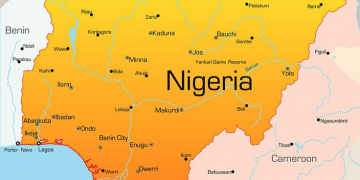







Nigeria needs to leverage on a political and economic dimensions for making the regional idea work. The political dimension requires transforming the six geopolitical zones into regions made up of states and local governments.
I can really never stop talking about Nigeria. This statement is meant to explain why I keep returning to the issue of federalism and restructuring that has taken the centre stage of national discourse lately. And this is rightly so too. No one who believes in Nigeria and the Nigerian project ought to keep quiet. If we all agree that Nigeria is a work in progress, then it behooves all right thinking and patriotic Nigerians to pool thoughts and plans together towards reinventing the Nigerian state. And there is no better way to start than by constantly addressing and brainstorming on what seems so immediate but fundamental to Nigeria鈥檚 future as a nation鈥攈er federal status. It is unfortunate that so much ink had to be spilled and so much time wasted on what needed to have been done and quickly, but this only tells us what harm politics can do to governance and national imperatives. But then, the complexity of the reform imperative derives from its constant maneuverings between policy feasibility and political correctness. But no matter what happens, the reform instinct must be kept on edge about issues that are critical to the urgent responsibility of reinventing Nigeria as a democratic and federally viable state.
A good place to commence this round of discourse on federalism is, of course, the conceptual. And this implies quickly debunking the enormous but false expectation derivable from couching the discourse in terms of Nigeria achieving a 鈥渢rue federalism.鈥� Concepts like 鈥渢rue federalism鈥� or 鈥渢rue democracy鈥� are based on the wrong idea that there is a true and perfect but concrete embodiment of federalism or democracy somewhere in the universe to which countries like Nigeria ought to aspire. This is a patently false deduction. The federal idea is a human ideational construct meant to engage human political dynamics of living together. And this implies automatically that it is subjected to specific weaknesses arising from context-bound anomalies. This is a good starting point for understanding and engaging with the predicament of Nigerian federalism. If we must make any reform headway with this predicament, we need to first get its conceptual and contextual necessities right. What we have from K. C. Wheare is not the ideal of federalism, but a significant statement of the federating paradigm consisting of a centre and regional arrangement circumscribed by competitive learning and sharing.
This conceptual understanding is relevant because it outlines a framework that makes for a development-sensitive national dynamics within which regions and federating states could have straight constitutional leeway to make progress without getting tied down by any centralising factor. But like most states in the world, the case is that federalism is so poorly executed as to make it less that enabling as a development initiative. In the Nigerian case, the core issues which have not been cogently addressed sufficiently to give our federalism a bite include (a) the number and nature of the federating units; (b) fiscal issues in the relationship between the federating units; (c) the schedule of functions that ought to divide the relevant responsibilities in a way that makes a federal state really federal; (d) the dynamics of party politics and the electoral system that regulates the political parties and their jostling for power; (e) inter-governmental relations; etc. All these are significantly contentious issues which, we agree, may not be amenable to some final resolution. I doubt if there is any political issue that can be so resolved. On the contrary, what we must aim for is some level of compromise that allows for some reform tinkering that can move us forward. This is the kind of resolution I have been pushing for in the issue of federalism in Nigeria.
The underlying question, in the Nigerian case, is simple: Under what condition(s) can Nigeria become a really federal state with the required dynamics to enable sustainable development? A sincere attention to this question will bring to light contentions, pressures and threats which have served to undermine the desire for unity up till now, but that can only be managed through a sustained and systematic process of critical bargaining and negotiations that will help keep an equilibrium between centrifugal and centripetal forces. The Nigerian leadership has played the ostrich with the forces of ethnicity and religion for far too long. Federalism is definitely not a magic wand whose implementation will bring an immediate end to Nigeria鈥檚 complex problems. But then, it is a necessary national instrument that will at most take the sting out of any fragmenting tendencies arising from ethnicity. What do we make of the current agitation for Biafra that has taken the front burner of national discourse boils down ultimately to a lopsided national framework that prevents productive debate around restructuring and citizenship? The Biafran agitation, in other words, speaks to some fundamental need by the various constituents of the Nigerian state to find a national platform that will address their disaffections. Presently, Nigeria鈥檚 lopsided federal arrangement has failed to do this. And the crises multiply.
The Nigerian Constitution is a grand paradox that professes federalism within a unitary constitutional framework. The consequence is the contradictory relations between the states and the local governments鈥�
The root of all these crises lies in a constitution that still carries a legitimacy baggage and that is shot through with contradictions that undermine any genuine attempt at restructuring. One good instance suffices. Section 7 of the 1999 Constitution supposedly established the Local Government Councils as the 鈥淭hird Tier鈥� of government with their own democratically elected government and governance dynamics. Yet, the same Constitution empowers the states, as the 鈥淪econd Tier鈥� of government to legislate on local government affairs. For example, the state now not only constitutes spurious 鈥渃aretaker committees鈥� to oversee local government administrative issues, but also stringently manages local government funds in a manner that starve these third tier of the significant capacity and capability to carry out their governance responsibility, especially those spelt out in the Fourth Schedule of the Constitution.
It is, therefore, the root of these crises that must be tackled through, first, a strong political will that is directed at three levels of national reform鈥攃onstitutional, governance and political. The constitutional-legal reforms require creating a balance between negotiated bargaining and constitutional amendments, in which the latter becomes expedient when the former fails to yield the desired expectations. The Nigerian Constitution is a grand paradox that professes federalism within a unitary constitutional framework. The consequence is the contradictory relations between the states and the local governments highlighted earlier. The centre possesses some undue and overbearing dominance grounded in the Exclusive List, which makes the federal government the centralising standard in all critical areas of national endeavour. However, this entrenched centralisation requires an urgent decentralising reform. This implies a serious redirection away from an undue centralisation grounded through the creation of common national denominators and standards in education, health, agriculture and mineral exploitation. This national unitary practice does not give room for a genuine rivalry around the competitive advantage each region possesses. Decentralisation is central to a genuine federalism. It involves the proper devolution of power, functions and responsibilities to the three tiers of government in a way that will facilitate concurrent development according to regional capacities.
I have hitherto argued for the regionalisation of the six geopolitical zones in Nigeria. But we need to add a significant caveat which states that a constitutional reform is nothing without a complementary governance and political reform. In other words, restructuring goes beyond lip service to a deep-seated political reform that will institutionalise extensive dynamics of good governance at the three tiers of government. This requires a serious cleanup of our debilitating governance practices that, for instance, leaves the local government councils not as significant sites of democratic governance but as 鈥渟haring centres鈥� for greedy politicians. The same kind of reform must equally undermine the capacity of state governors to be 鈥渟ole administrators鈥� with no critical governance vision and implementation capacity for good policies. One critical dimension of the decentralising imperative requires rethinking the local governments as the most critical site for a bottom up reform of the imperatives of democratic governance, especially in terms of democratic service delivery to the citizenry. In this sense, the subsidiarity principle serves a huge governance function.
An ideology-based politicking has a lot to contribute to the evolution of a mature and developmental political culture in Nigeria. Essentially, it is from ideology that some sense of governance specificities derive.
The principle, when applied to democratic governance, simply insists that in a federal setting, there must be a constitutional provision that is hinged around the subsidiarity function. This implies that the central government must perform only those functions that cannot be devolved effectively to the local government. This is crucial not only because subsidiarity backstopped decentralisation and devolution of powers, but essentially because the principle is founded on the necessity of generating a welfare dynamics that reaches to the heart of the grassroots where the people are. Governance cannot be said to be good if it fails to capture the welfare aspirations of the people. Thus, a governance framework that enshrines the subsidiarity principle has equally captured the federalism tenets, as well as the democratic imperative.
However, a good governance framework that acts on the principle of subsidiarity also owes a lot to the reform of party politics in Nigeria. A political party is known by its capacity to ideologically deploy power to the welfare of the populace. A party that does not operate according to the dictate of an empowering ideology therefore becomes not only democratically ineffective but also futile as a good governance instigator. We, therefore, become immediately aware of the democratic consequence of Nigerian politicians moving seamlessly and opportunistically from one political party to another without any ideological compulsion which perfectly explains why Nigeria鈥檚 electioneering campaigns have been individual- rather than issue-focused; why our political culture has been marred by zero-sum, do-or-die politicking; and why money stands at the centre of politics.
An ideology-based politicking has a lot to contribute to the evolution of a mature and developmental political culture in Nigeria. Essentially, it is from ideology that some sense of governance specificities derive. Thus, both the Republicans and the Democrats love the United States, but they love her differently based on the specifics of their party ideologies. Nigerian political parties have no ideological frame, on the contrary, and hence could not manage the challenges of governance in a way that makes democracy efficient for development.
In my last intervention on this issue, I championed a principle of political restructuring as a precondition for economic prosperity. This has been at the centre of my re-federalising reform for Nigeria for a while. Nigeria needs to leverage on a political and economic dimensions for making the regional idea work. The political dimension requires transforming the six geopolitical zones into regions made up of states and local governments. The economic dimension requires leveraging the comparative advantages of each region as the source of development. This reform principle grounds the transformation of the governance framework in Nigeria solely on the revival of local governance, especially around agriculture as the most common, but critically neglected, common denominator in Nigeria. Agriculture has remained under the shadow of crude oil for too long, and has thus contributed its own debilitation to the imbalance in governance. This puts some enormous pressure on the constitution, and especially the political elites to initiate the crucial negotiations that could move Nigeria鈥檚 governance imperative forward. The elites owe Nigeria this much.
Tunji Olaopa is executive vice-chairman, Ibadan School of Government and Public Policy (ISGPP); Email: [email protected], [email protected]