









Akinwande Soji-Ojo
The chairman of the Federal Civil Service Commission (FCSC), Prof. Tunji Olaopa, has called on Nigeria鈥檚 higher institutions to shift their focus towards equipping graduates with digital and soft skills needed to thrive in the modern workplace and reduce youth unemployment.
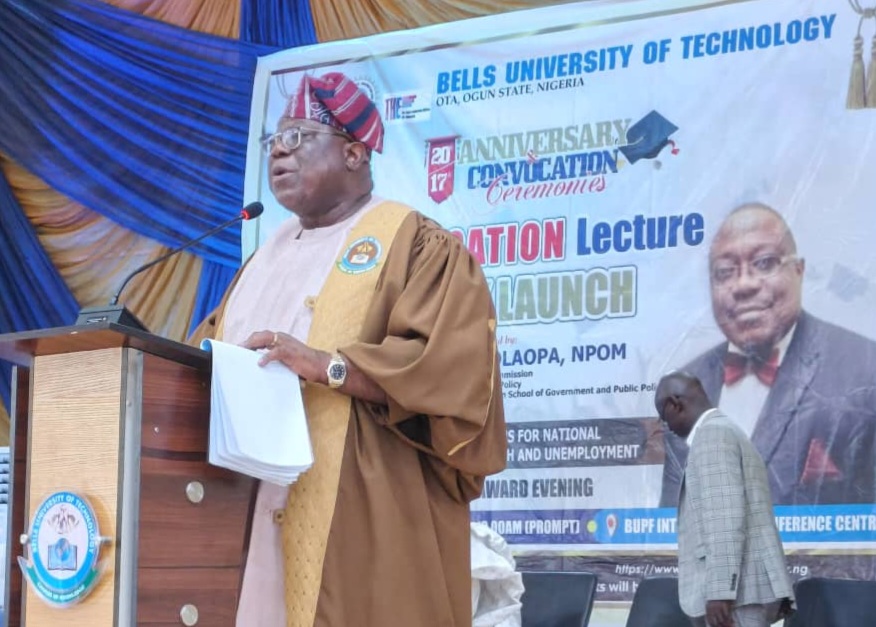
Delivering the 17th convocation lecture of The Bells University of Technology, Ota, Ogun State, on Friday, Olaopa described the nation鈥檚 growing youth population as a potential national asset that must be harnessed through purposeful education and skills development.
Speaking on the topic, 鈥淭he Nigerian Youth and the Challenges of Unemployment and Skills Mismatch in National Development,鈥� the FCSC chairman lamented that the country鈥檚 huge youth population is being wasted through underemployment and outright unemployment.
Olaopa emphasised the need for universities and colleges to prepare graduates for the realities of a technology-driven economy, urging government to declare a state of emergency in the education sector.
鈥淥ur higher institutions must rethink their curriculum to equip the graduates of the future with digital, soft, technical, and vocational skills. The future of work is already here, driven by technology, and our education system must rise to the challenge.
“Digital skills such as Artificial Intelligence (AI), machine learning, data analytics, programming, cloud computing, and cybersecurity must now be mainstreamed into our teaching and learning processes,鈥� he said.
Olaopa also highlighted the importance of soft skills such as critical thinking, problem-solving, teamwork, emotional intelligence, communication, and leadership. He added that lifelong learning, adaptability, and resilience must become integral components of higher education.
He further urged universities of technology to play a leading role in addressing the graduate unemployment crisis by strengthening university-industry collaboration, embracing software development training, and leveraging government initiatives like the National Information Technology Development Agency (NITDA) digital literacy framework.
According to him, creating enabling environments for innovation and start-ups within campuses will help prepare students for self-reliance and national development.