





Akinwande Soji-Ojo
Security experts, policymakers and academics have renewed calls for the establishment of constitutional state policing in Nigeria, warning that the country鈥檚 worsening security situation demands urgent structural reform.
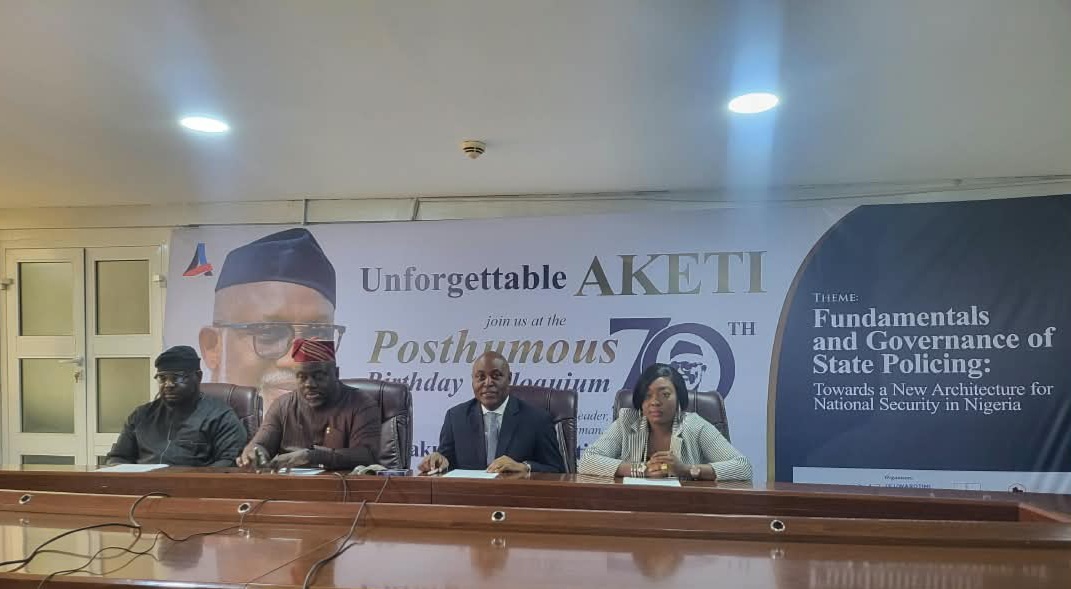
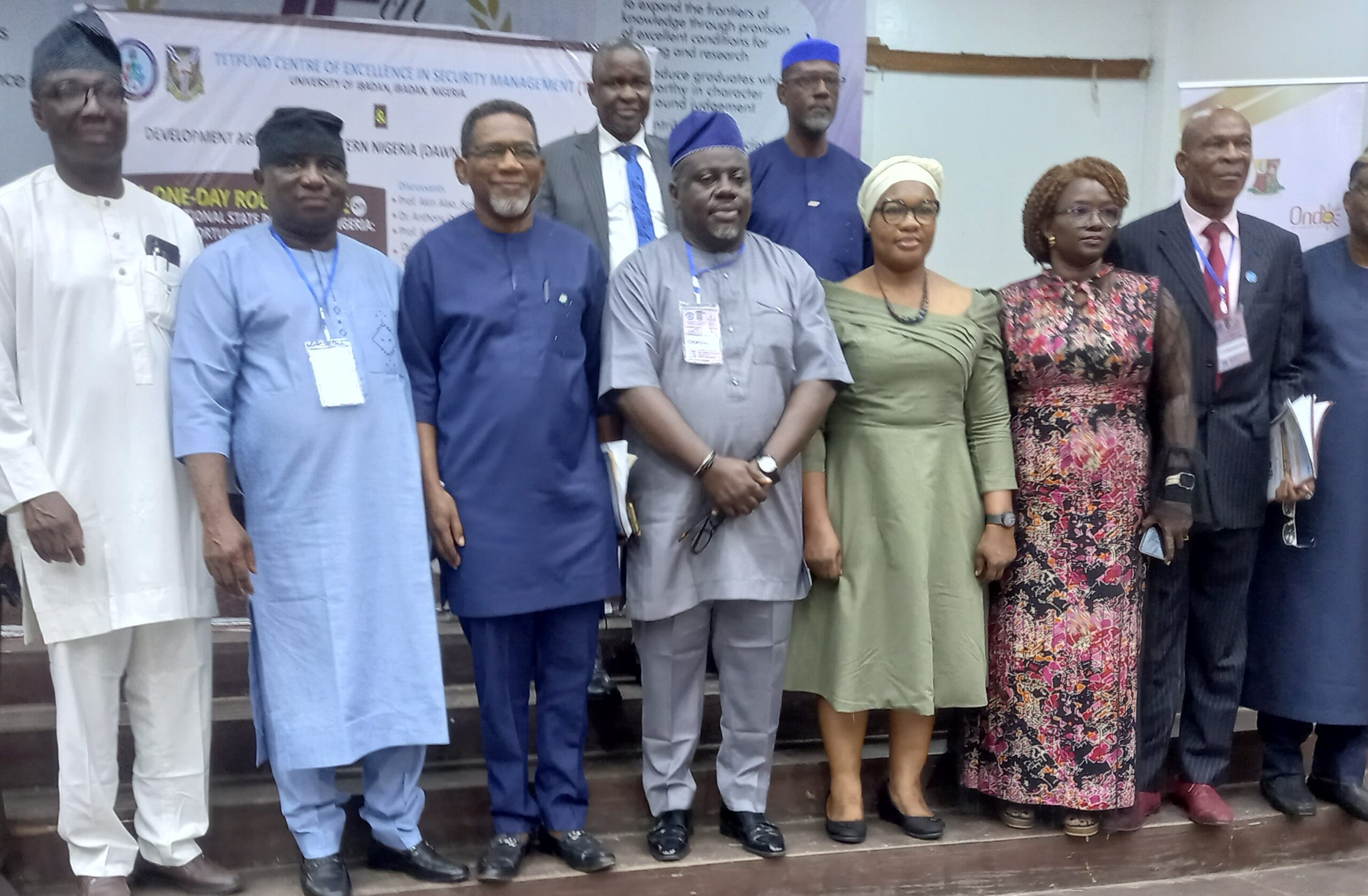
The call was made at a one-day roundtable on 鈥淐onstitutional State Policing in Nigeria: Opportunities, Challenges and Implementation,鈥� jointly organised by the Development Agenda for Western Nigeria (DAWN) Commission and the TETFund Centre of Excellence in Security Management (TECESM), University of Ibadan.
The roundtable, held at Trenchard Hall, University of Ibadan, brought together security professionals, scholars, civil society leaders and policymakers to examine the challenges and practical steps toward a workable state policing framework for the South-West
Delivering the keynote address, Dr. Adesina Ayodele Fagbenro-Byron, Chairman/CEO of Mothergold Consulting Ltd, described the meeting as 鈥渙ne of the most timely and consequential national policy conversations.鈥�
鈥淭his conversation is about more than policing. It is about state legitimacy. It is about citizen confidence. It is about whether the Nigerian federation can still effectively discharge the first and most sacred duty of government 鈥� the protection of lives, liberties, property and national territorial integrity,鈥� he said.
He warned that insecurity has become a nationwide systemic crisis, saying: 鈥淭he South West can no longer afford the illusion of strategic immunity. Geography is no longer a reliable defence against violent extremism. Distance is no longer a security strategy. State policing has become a strategic national imperative.鈥�
Fagbenro-Byron cautioned against replicating the weaknesses of the centralised police structure.
鈥淣igeria must not decentralise dysfunction. If state policing reproduces the limitations of the current structure, we would have multiplied inefficiency rather than solved it,” he warned.
Across the roundtable, discussants including Prof. Akin Alao of the Department of History, Obafemi Awolowo University; Dr Anthony Oyedeji, Programme Officer (Governance), JDPL; Prof. Adesina Afolayan of the Department of Philosophy, University of Ibadan; Dr Temitope Bello of the Department of Political Science, Kola Daisi University; Barr. Mutalubi Ojo Adebayo (SAN), former Attorney-General of Oyo State; CP Fatai Owoseni (Rtd), former Lagos State Commissioner of Police and former Security Adviser to Governor Seyi Makinde; and Mr Wale Adeoye, Executive Director of Journalists for Democratic Rights (JODER), highlighted major obstacles and solutions for implementing state policing.
Participants emphasised that the legal framework must reflect the unique social, economic and religious diversity of the South West, describing the region as Nigeria鈥檚 most plural and economically vibrant zone. They stressed that the constitutional amendment process must be pursued vigorously, urging stakeholders to engage members of the National Assembly to set the machinery for state policing in motion.
They identified funding, recruitment, governance and public trust as major challenges. The experts stressed the need for independent recruitment bodies, professional training, monitoring mechanisms and strong oversight structures to prevent political misuse and ensure accountability.
The discussants also called for public sensitisation, community engagement and localisation of security solutions to reflect the needs, language and realities of communities.
They urged state governments to begin institutional reforms immediately by strengthening state Houses of Assembly, creating legal frameworks, establishing state police departments and integrating existing regional initiatives such as Amotekun into a broader security architecture.
Retired security officials at the forum warned that without good governance, effective funding and strong accountability, state policing would fail to deliver results.
In his remarks, Director-General of DAWN, Dr. Seye Oyeleye, said the commission would extend advocacy to federal lawmakers.
鈥淲e are not just speaking to ourselves. We cannot continue to do the same thing and expect different results. State police is very imperative.
鈥淵ou cannot have a police force of 400,000 for about 235 million people. It is not going to work,” he said.
Director of TECESM, Prof. Adeniran Aluko, said the roundtable outcomes would be presented to South West governors.
鈥淭his is not an exercise in futility. We are creating a platform where ideas can be harvested and turned into policy,鈥� he said.
In his closing remarks, Fagbenro-Byron urged stakeholders to move from conversation to implementation.
鈥淭his is about renewing the Nigerian state, strengthening federalism and restoring citizen confidence. History will judge us not by our intentions, but by our decisions and our speed. Nigeria cannot wait,鈥� he said.
The roundtable ended with a commitment to develop an actionable regional roadmap for constitutional state policing across South West Nigeria.