





By Omolola Afolabi
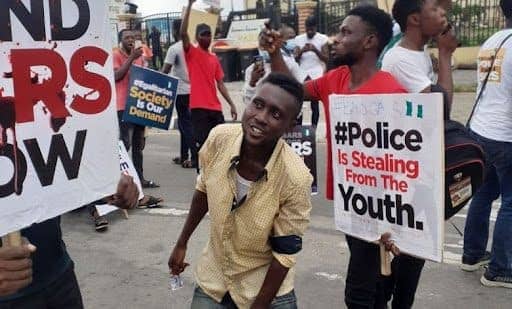
Six years after young Nigerians took to the streets to demand an end to police brutality, the ghosts of October 2020 continue to haunt the nation’s conscience. The #EndSARS protests were more than a spontaneous reaction to a viral video; they represented the culmination of years of anger over police misconduct, economic hardship and a growing sense of injustice.
Beneath the chants for police reform lay the heavy burden of rising inflation, unemployment and an economic downturn worsened by the COVID-19 pandemic and its accompanying lockdowns. For many young Nigerians, the struggle was not merely against police brutality but also against a system they believed had failed to provide security, dignity and economic opportunities.
At the heart of the uprising was the Special Anti-Robbery Squad (SARS), a police unit established to combat armed robbery but repeatedly accused of extortion, unlawful arrests, profiling, torture and extrajudicial killings.
To understand the anger that fuelled the protests, it is necessary to examine the history of allegations against the unit. Human rights organisations documented numerous cases of torture and extrajudicial killings involving SARS operatives, particularly targeting young Nigerians aged 18 to 35. The controversy surrounding the unit also recalled earlier allegations of grave abuses, including the discovery of bodies in a river in Akwuzu, Anambra State, in 2013.
When the Federal Government announced the disbandment of SARS on October 11, 2020, the decision was met with scepticism. Previous attempts to restructure or disband the unit had failed to end the allegations of abuse, leaving many Nigerians doubtful that another announcement would produce lasting change.
The protesters’ demands, popularly known as the five-for-five demands, were clear: the release of arrested protesters, justice and compensation for victims of police brutality, an independent body to investigate police misconduct, psychological evaluation and retraining of former SARS operatives, and improved police salaries and welfare.
Yet, the movement soon transcended its original demands, becoming an extraordinary demonstration of youthful organisation and civic participation. Across more than a dozen cities, young Nigerians mobilised beyond ethnic, religious and political divisions to demand accountability.
Organisations such as the Feminist Coalition helped coordinate donations and support for legal assistance, medical bills, food and security at protest locations. Volunteers organised clean-up exercises, while individuals and businesses contributed food and other supplies to sustain protesters. Support from Nigerians at home and abroad demonstrated the power of collective action and the determination of young people to sustain the movement.
Then came the defining moment of October 20, 2020, at the Lekki Toll Gate in Lagos.
The shooting of protesters by security personnel that night became one of the most controversial episodes in Nigeria’s recent history. The Lagos State Judicial Panel of Inquiry, established to investigate the incident, found that protesters were shot at, injured and killed. Its report implicated the Nigerian Army and the police, although the findings and casualty figures subsequently became subjects of dispute between the panel and government authorities.
The incident left the nation grappling with questions about the use of force against peaceful demonstrators, the conduct of security agencies and the accountability of those responsible for violations. Among those whose deaths became associated with the wider protests was Pelumi Onifade, a journalist who died after being arrested while covering protest-related events.
Six years later, the central question remains: did #EndSARS achieve its objectives, and has Nigeria witnessed meaningful police reform?
The answer is complicated. SARS was disbanded, judicial panels were established across several states, and some victims received compensation. The Police Act 2020 also introduced a legal framework intended to strengthen accountability, professionalism and respect for human rights.
However, concerns remain about the implementation of reform measures and whether they have fundamentally changed police conduct.
Human rights organisations continue to report allegations of unlawful arrests, torture, extortion, prolonged detention and extrajudicial killings. Critics argue that the disbandment of SARS did not, by itself, dismantle the institutional practices that gave rise to the protests. Questions have also persisted about whether former SARS operatives were adequately investigated, disciplined or retrained before being redeployed.
The distinction is important: abolishing a police unit is not the same as reforming the institution within which it operated. Genuine reform requires transparent investigations, effective supervision, accountability for misconduct and a policing culture that respects citizens’ rights.
The unresolved questions surrounding the protests have also made their anniversaries significant. On October 20, 2026, police fired tear gas to disperse people who gathered at the Lekki Toll Gate to commemorate the sixth anniversary. The incident renewed concerns about the right to peaceful assembly and the relationship between security agencies and citizens.
For many Nigerians, the disruption of memorial activities reinforces the feeling that the grievances behind #EndSARS remain unresolved. Remembering those who died is not simply an exercise in revisiting the past; it is also a demand for truth, justice and assurances that similar abuses will not recur.
The movement’s legacy, however, extends beyond its immediate demands. It demonstrated the capacity of young Nigerians to organise, mobilise resources, coordinate relief efforts and sustain a nationwide campaign without relying entirely on traditional political structures. It also forced police accountability and citizens’ rights to the centre of national debate.
But the challenge is to turn that consciousness into lasting institutional change. The existence of new laws, committees and policy announcements means little if victims are denied justice or allegations of abuse are not investigated transparently.
As Nigeria approaches another election cycle, police reform should remain a matter of public accountability rather than a promise made during moments of national outrage. Authorities must demonstrate measurable progress in implementing judicial-panel recommendations, investigating allegations of misconduct and protecting citizens who exercise their constitutional rights.
Six years after #EndSARS, the protests have not resolved every problem that inspired them. Nevertheless, they changed the national conversation about policing, accountability and the responsibilities of government.
The tear gas used to disperse anniversary gatherings cannot erase the memories of October 2020, just as the disbandment of SARS cannot, on its own, guarantee an end to police brutality.
Until Nigerians can trust that police officers will protect rather than abuse them, that complaints will lead to credible investigations, and that victims will obtain justice, the promises made in the aftermath of #EndSARS will remain unfinished business.