






The Nigeria Centre for Disease Control and Prevention (NCDC) has identified 53 primary contacts linked to the country鈥檚 confirmed Ebola case in the Federal Capital Territory (FCT).
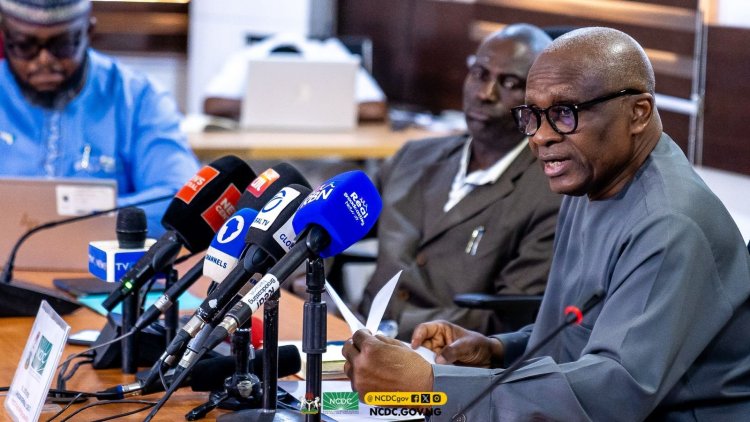
The Director-General of the NCDC, Dr. Jide Idris, disclosed this on Sunday during a media briefing in Abuja, where he provided an update on the country鈥檚 response to the outbreak.
Idris said the contacts included healthcare workers, members of the patient鈥檚 household, her driver and chef, as well as health personnel involved in collecting samples from her.
鈥淎s of now, we have 53 primary contacts. These comprise 44 people from the health facility where the patient was treated and nine additional contacts.
鈥淥f the nine additional contacts, three are household members of the patient, her driver, chef and husband. Three others attended to her at Julius Berger Clinic before she got to the other facility, while the remaining three are members of the team who went to collect samples,” he said.
According to him, the contacts have been identified and categorised based on their level of exposure, while public health teams are monitoring them.
Idris said none of the identified contacts had tested positive for Ebola or developed symptoms as of the time of the briefing.
He also disclosed that the agency had investigated two cases: the confirmed case in the FCT and a suspected case in Rivers State, which tested negative for Ebola.
The NCDC boss said the confirmed patient tested positive in three samples collected for laboratory analysis, while her husband tested negative for the disease.
Idris said contact tracing was ongoing, with public health teams working to identify people who might have been exposed to the patient and assess their level of risk.
He explained that the identified contacts would be monitored for 21 days after their last possible exposure, in line with Ebola鈥檚 incubation period.
He added that the number of contacts could change as investigations progressed and more information became available.
According to him, being identified as a contact does not mean that a person has contracted Ebola but allows health authorities to monitor their health and detect possible infections early.
Idris urged Nigerians contacted by public health officials to cooperate with monitoring teams and provide accurate information about their movements, contacts and any symptoms they might experience.
The NCDC director-general said the agency was strengthening laboratory capacity and infection prevention measures nationwide to prevent further transmission of the disease.
He disclosed that about 12 laboratories had been identified as having the capacity to test for Ebola, while efforts were ongoing to ensure the availability of reagents and other essential supplies.
Idris said testing for the confirmed case was being conducted at the National Reference Laboratory, with other facilities receiving support to ensure that suspected cases could be investigated promptly.
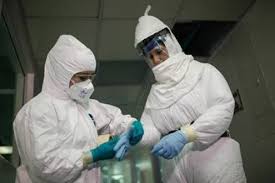
The NCDC boss added that the agency was working with health authorities to train healthcare workers on infection prevention and control measures, including the proper use of personal protective equipment, hand hygiene and the safe disposal of potentially infectious materials.
He said preparedness and response activities were being strengthened in states considered to be at higher risk, while the NCDC was finalising an incident action plan with partners to coordinate the national response.
Idris commended healthcare workers for their vigilance in detecting the confirmed case. He also urged Nigerians to rely on information from public health authorities and avoid spreading rumours.
Nigeria confirmed an imported Ebola case in the FCT on October 20, marking the country鈥檚 first confirmed case since the 2014 outbreak.
The patient is a 42-year-old Ugandan-born woman residing in Abuja who recently returned from a holiday in Kampala, Uganda.
According to the Africa Centres for Disease Control and Prevention (Africa CDC), the woman returned to Nigeria on October 3 and developed symptoms three days later.
On Friday, Nigerian authorities announced that genomic analysis showed a high degree of similarity between the virus detected in the Nigerian patient and that found in Kenya鈥檚 first imported case.
The Coordinating Minister of Health and Social Welfare, Prof. Muhammad Pate, said the finding did not establish that the Nigerian patient had contracted the disease in Kenya, as there was no evidence that she had travelled there.
The Africa CDC had earlier said it was investigating a possible link between the Nigerian and Kenyan cases because both patients travelled through Uganda鈥檚 Entebbe International Airport on October 3.
Kenya鈥檚 first case was imported from the Democratic Republic of the Congo through Uganda. The country has since recorded nine confirmed cases, including two deaths, with the eight additional infections linked to the first patient.