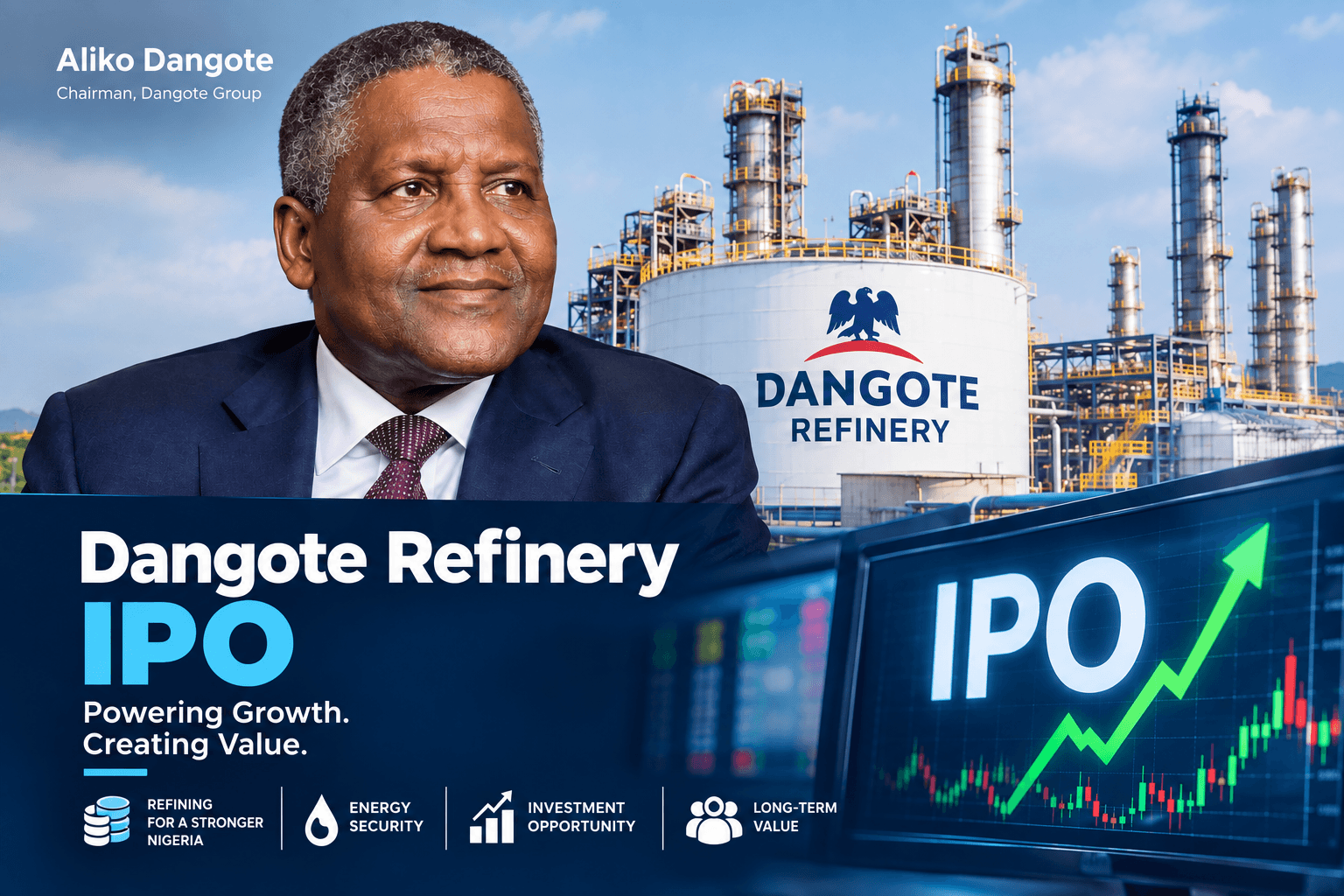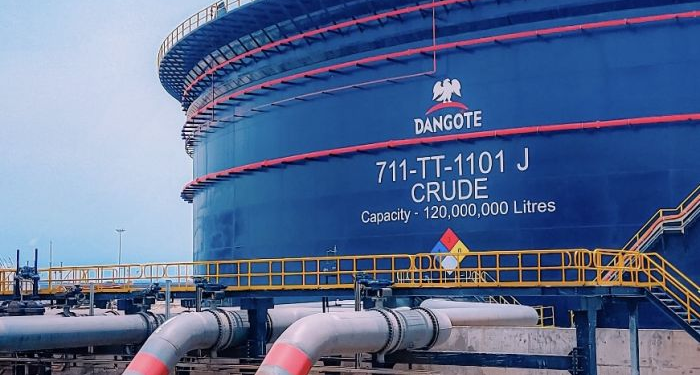






Dangote Petroleum Refinery’s proposed initial public offering (IPO) could significantly reshape Nigeria’s capital market if it proceeds at a reported valuation of $40 billion, according to EBC Financial Group.
In a statement issued on Thursday, the financial services firm said the refinery’s reported valuation, based on a recent private placement, would make it one of the largest companies on the Nigerian Exchange (NGX), accounting for about 25.6 per cent of the market capitalisation of an expanded NGX.
EBC estimated that the refinery would be worth about N54.63 trillion using the Central Bank of Nigeria’s official exchange rate of N1,365.6856/$1 as of August 7. Combined with the NGX’s market capitalisation of N158.51 trillion on the same date, the total market value would rise to about N213.14 trillion.
The firm, however, cautioned that the success of the proposed IPO would depend not only on its valuation but also on whether it attracts fresh investment into the Nigerian stock market or merely shifts existing funds from other listed companies.
Senior Market Analyst at EBC Financial Group, David Precious, said the planned $5 billion fundraising target raised important questions about the source of investment capital.
“If Dangote Refinery entered the Nigerian Exchange at close to a $40 billion valuation, it could account for roughly one-quarter of the resulting NGX market value. If that valuation is difficult to support, few shares are available for public trading, or investors need to reduce other Nigerian holdings to participate, the effects could extend across Nigeria’s equity market, including existing NGX-listed companies and their shareholders,” he said.
According to EBC, the reported $40 billion valuation was derived from a private placement in which a 6 per cent stake was sold for $2.5 billion. However, it stressed that a private transaction does not necessarily determine the valuation that public investors would be willing to accept during an IPO.
The firm noted that the reported valuation is substantially higher than those of comparable international refiners, including T眉rkiye’s Tupras, valued at about $12 billion, and US-listed HF Sinclair, valued at approximately $16 billion.
It said the disparity underscores the need for audited financial statements, detailed earnings reports, cash flow projections and investment plans to justify the refinery’s valuation.
EBC further observed that the proposed $5 billion capital raise, equivalent to about N6.83 trillion, represents roughly 4.3 per cent of the current value of the Nigerian stock market.
It explained that if the IPO attracts new domestic or foreign investment, it could expand the size of Nigeria’s equity market. However, if investors sell existing holdings to participate, capital could be diverted from other listed companies.
The report also highlighted the importance of public share availability, noting that NGX listing rules allow companies to qualify with either a minimum public shareholding or a specified value of publicly tradable shares.
“This means a company worth tens of trillions of naira could still have a much smaller amount of stock available for regular trading if ownership remains concentrated,” the firm said.
EBC also pointed to growing regional interest in the proposed listing, with reports of possible participation from investors in South Africa, Kenya, Egypt, Ghana and Rwanda. It added that the Johannesburg Stock Exchange had indicated Dangote Group intends to pursue a South African listing after the Nigerian IPO.
The firm said Nigeria’s pension industry could also play a role after the National Pension Commission granted a one-off waiver allowing Pension Fund Administrators to consider investing in the IPO despite the refinery not meeting the usual profitability and dividend requirements.
However, it noted that pension fund managers would still be required to comply with their internal investment policies and fiduciary responsibilities.
Precious said the listing could mark a defining moment for Nigeria’s capital market if it broadens public ownership and attracts additional African investment.
“Investors still need clear evidence supporting the valuation, clarity on how much of the company they can trade and an explanation of where the money raised will go. Those answers will determine whether the listing expands the Nigerian equity market or concentrates more investment around one company,” he added.
EBC said an approved prospectus would ultimately provide clarity on the valuation, number of shares on offer, level of public ownership and use of proceeds.
While the Securities and Exchange Commission (SEC) said in June that no IPO application had been filed or approved at the time, reports indicate an application has since been submitted, with regulatory approval expected in the coming weeks.
EBC Financial Group is a London-based financial brokerage and asset management company with regulated operations across several global financial jurisdictions.