Akinwande Soji-Ojo
Stakeholders have stressed the importance of regional integration in driving Nigeria’s growth and development.
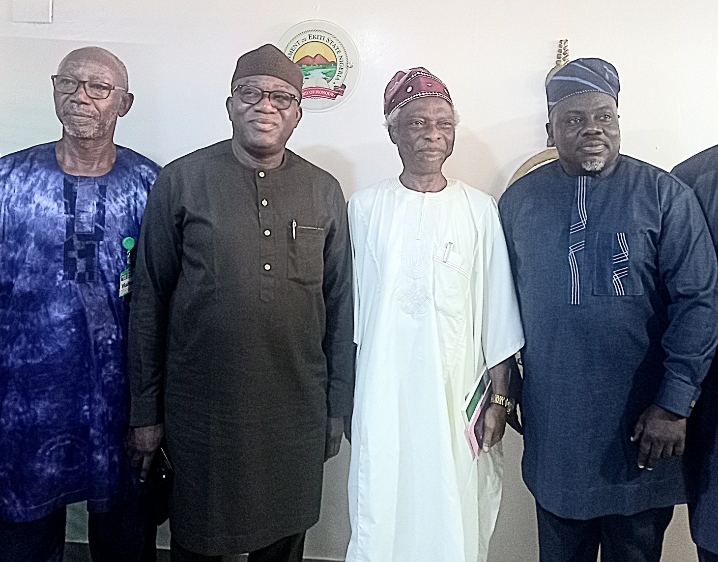
The stakeholders spoke at a roundtable discourse, titled, ‘Beyond Administrative Boundaries: Reimagining Nigeria’s Development through Regional Integration,’ to celebrate the 60th birthday of former Ekiti State Governor, Dr. Kayode Fayemi.
The discourse, hosted by the Development Agenda for Western Nigeria (DAWN) Commission, at its office in Cocoa House, Ibadan, had in attendance dignitaries from all walks of life including former Head of Department, Department of Political聽Science, University of Ibadan (UI), Prof. Remi Aiyede; Dean, Faculty of Economics and Management Sciences, Obafemi Awolowo University (OAU), Prof. Abiodun Folawewo; Prof. Olugbemiga聽 Afolabi from Department of Political Science, OAU; Dr.聽Emmanuel Akubor from Department of History, OAU; Hon. Wale Oshun, Chairman, Afenifere Renewal Group; Sir Gbenga Adebusuyi, Dr Tunde Adegbola, and a lecturer from UI, Tahir Ijaya, among others.
In his keynote address, Prof. Aiyede noted that three recent developments have highlighted the challenges of intergovernmental relations in Nigeria, adding that the developments have sparked debates and controversies across federal, state, and local governments.
He said the the Supreme Court judgement on local government autonomy, creation of Ministry of Regional Development and regional development commissions, and the proposed tax reform bills have underscored the complexities of intergovernmental relations in Nigeria, and brings to the forefront the challenges of balancing the interests of federal, state, and local governments.
“Each of these has generated significant discourse, with the local government judgement and tax reform bills being particularly contentious,” Aiyede said.
The professor of political institutions, governance and public policy argued that it is essential to foster greater collaboration and dialogue among all tiers of government to ensure that policies and decisions are effective, promote economic growth, foster equitable development and national unity.
He also noted the importance of regional commissions as veritable tools of intergovernmental collaboration, innovation and interest promotion, noting that they are essential to harmonious relationships across the federation. Aiyede said regional commissions operate as intermediaries between the federal government and the constituent states or regions, ensuring that regional interests are represented in national decision making.
“They are essential for coordinating policies, addressing regional issues, and ensuring balanced development across the federation. Horizontal initiatives among volunteering states to form RDCs or bilateral or multilateral agreements are better than top-down federal government initiatives. Indeed, horizontal initiative are reliable indicators of the health of cooperative federalism,” he said.
Aiyede, who higlighted the challenges faced and success factors of regional development commissions, said the quality of a country鈥檚 governance and its institutions plays a significant role in driving economic growth and development.
“Research has consistently shown that strong institutions have a profound impact on income per capita and overall economic performance . In federations, regional development commissions serve as critical mechanisms for promoting balanced regional growth, maintaining intergovernmental harmony, and ensuring efficient governance. By bridging the gap between local and national authorities, these bodies contribute to a more responsive and equitable governance structure, ultimately benefiting the entire federation,” he said.
The academic, however, said while regional development commissions may offer a targeted approach to addressing specific challenges, their proliferation risks exacerbating bureaucratic inefficiencies and deepening existing governance challenges.
“A more sustainable solution lies in strengthening existing institutions, improving coordination between federal and state governments, and ensuring transparent and effective allocation of resources to meet the needs of all regions. Rather than relying on federal government interventions, which are often characterised by the politics of resource-sharing or “cake-sharing,” greater emphasis should be placed on horizontal cooperation among states.
“Collaborative efforts at the regional level can drive sustainable development initiatives through joint projects that benefit multiple states,” he added.
The discussants at the event– Prof. Folawewo, Prof. Afolabi, Dr. Akubor, and Ijaya– said Nigeria鈥檚 development story cannot be rewritten with the same fragmented, state-centred approach that has long constrained its economic potential.
They noted that regional integration is the most pragmatic route to sustainable growth because it leverages economic synergies that administrative borders often stifle.
The discussants asked the federal government to聽 grant regional commissions the autonomy they need, the institutional reforms to align governance structures with economic realities, and the active participation of businesses and local communities in shaping their own futures.
They added that Nigeria is at a crossroads and requires聽 bold policy shifts, transparent leadership, and a relentless commitment to making regional integration a working reality.
They further urged the government to desist from setting up agencies聽 or bodies just to balance the numbers, stressing that there is need for institutional and policy reforms to address emerging realities.聽 聽
In his contributions, Fayemi lamented that after more than 60 years, there is nothing to celebrate due to the country’s “arrested growth.”
He stated that there is “no one-size fits all” in regional development approach, adding that regional development should be based on the needs of each region.
“In 1979, Nigeria’s GDP is higher than that of China. Look at where Nigeria is today, and look at China. I am sad about missed opportunities.
“If taken seriously, regional commissions maybe our accelerated road to development. We have to be clear of what we want for oursleves,” he said.
The former governor, who went down memory lane on how DAWN commission came into existence, said the gathering afford participants the opportunity to reflect on “where we are and what we need to do on development.”
Fayemi said the work of the commission is just starting, urging DAWN to continue working with academics to profer solutions to the challenges facing the South West region and the country at large.
“DAWN Commission, the work is just starting. Sell your ideas to others if the government is reluctant,” he said.
He assured that he will continue to be active on issues affecting the region in and outside of office.
Speaking, the Director-General, DAWN Commission, Dr. Seye Oyeleye, said the commission decided to celebrate Fayemi because he is one of tbe prime movers of regional cooperation among the sub-nationals, even before he bacame a governor.
“He was the driving force under the Afenifere Renewal Group that gathered a lot of academicians, politicians and businessmen together to start thinking for the future of western Nigeria. When he became governor of Ekiti, it gave him the added impetus. He was the one that sold the idea of regional integration to his fellow governors then. So, this man will be 60 in six days time, and we feel we should tell this story,” he said.
Oyeleye reiterated that DAWN commission is a think thank for the newly established South West Development Commission, adding that the template for developing the region is already on ground.