Akinwande Soji-Ojo
The 650,000 barrels-per-day (bpd) Dangote Refinery is set to more than double its refining capacity to about 1.4 million bpd, positioning it as the world鈥檚 largest refinery and surpassing India鈥檚 1.36 million bpd Jamnagar facility.
President and Founder of Dangote Industries Limited (DIL), Aliko Dangote, disclosed this in an interview with S&P Global Commodity Insights, revealing that the company is also considering listing up to 10 per cent of its shares by next year as part of a shift in its business model.
According to the 68-year-old billionaire, the ambition to develop African energy independence is a 鈥渉erculean task,鈥� but one he describes as 鈥渁 labour of love,鈥� given the lack of government investment in large-scale industrial projects.
鈥淲e have to build the refinery again, either here or somewhere else. But really, somewhere else is not possible because we鈥檇 have to go and spend so much building infrastructure, and we have the infrastructure already here,鈥� Dangote said.
S&P Global projects that Nigeria鈥檚 net petrol imports could more than double between 2026 and 2027, reaching nearly 200,000 bpd by 2030, driven by economic and population growth.
In July, Dangote had announced plans to expand the refinery鈥檚 capacity from 650,000 to 700,000 bpd by the end of 2024. The new target of 1.4 million bpd marks a significant escalation, though no completion date has been confirmed.
Engineers at the Lekki complex said the refinery was designed with expansion in mind, featuring empty concrete plots that could accommodate a second refining system. Already Nigeria鈥檚 largest power producer, the Dangote Group generates twice the electricity it consumes, shielding operations from chronic national shortages.
Expansion could involve constructing a second refinery with similar configuration, possibly adding a vacuum distillation unit to boost output, S&P noted.
Dangote also confirmed ongoing projects in linear alkylbenzene and base oils, and a plan to grow polypropylene capacity from 1 million metric tonnes to 1.5 million in the coming years.
Rejecting the idea of Africa鈥檚 continued dependence on imported fuel, Dangote said he remains committed to transforming the continent鈥檚 refining landscape through private investment.
鈥淢ost African governments will not have the capacity to build a refinery. In places where interest rates are 30 per cent, some countries 20 per cent, the cost of funding is high. And the infrastructure is zero. Smaller projects like Angola鈥檚 new Cabinda facility are just a drop in the ocean,” he said.
He warned that Africa could 鈥渞eally be in trouble鈥� without significant private sector involvement in energy development.
According to S&P, Dangote鈥檚 $4 billion financing agreement in August helped resolve earlier funding challenges tied to maturing debt
To finance the next phase of expansion, including a new petrochemicals project in China, Dangote said he is considering strategic partnerships with Middle Eastern investors.
鈥淥ur business concept is going to change. Now, instead of being 100 per cent Dangote-owned, we鈥檒l have other partners,鈥� he said.
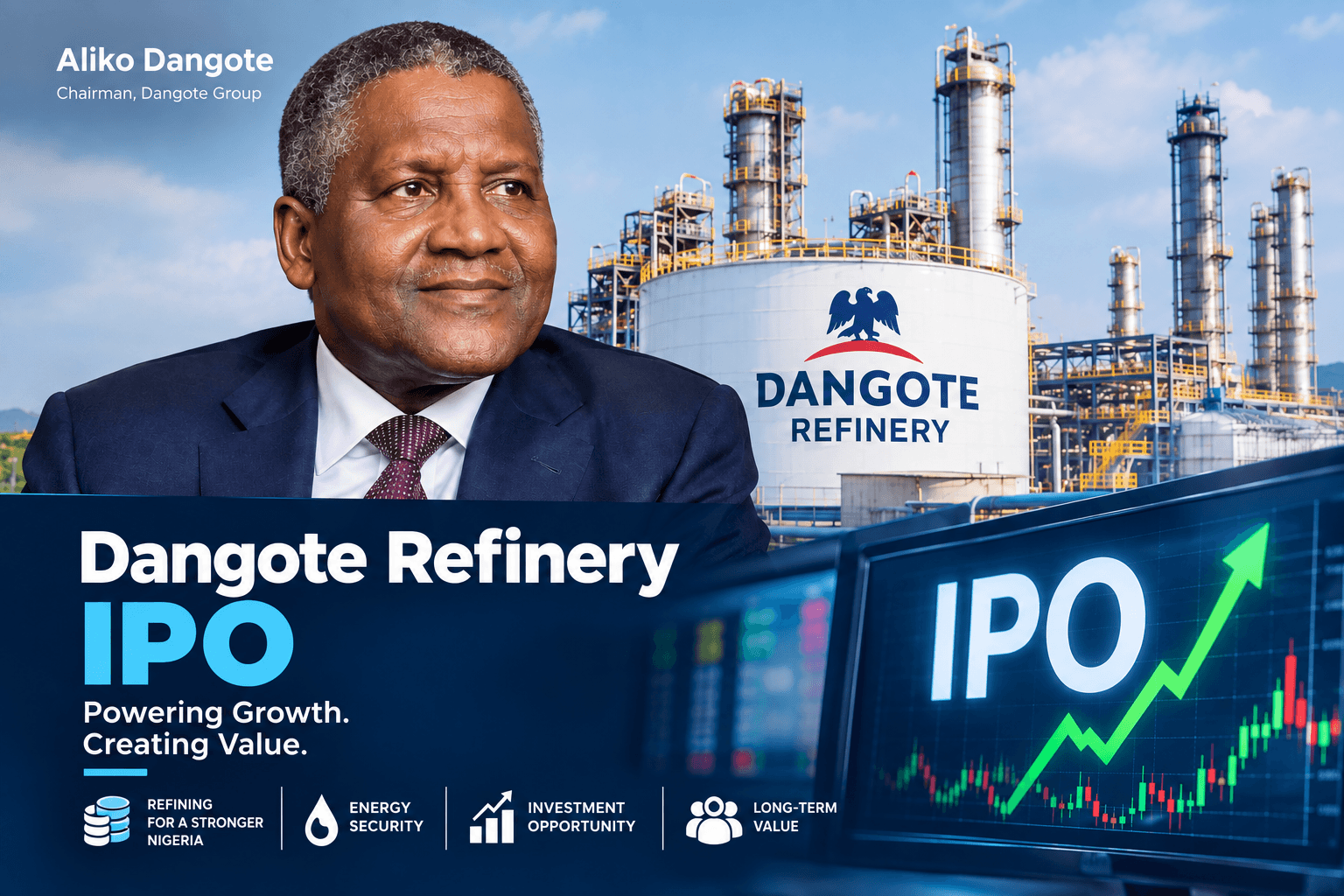
Within a year, the refinery arm will list 5 to 10 per cent of its shares on the Nigerian Exchange, following the group鈥檚 playbook with its cement and sugar subsidiaries.
鈥淲e don鈥檛 want to keep more than 65 to 70 per cent. We鈥檒l offer shares incrementally, depending on investor appetite and market depth,” Dangote said.
He also indicated that the NNPCL could increase its stake after recently trimming its holding to 7.2 per cent, but only after the refinery鈥檚 next growth phase begins.
鈥淚 want to demonstrate what this refinery can do, then we can sit down and talk,鈥� he added.
A Dangote aide told S&P that the company would proceed cautiously before inviting further NNPCL participation.
Despite its bold expansion plans, the refinery has faced early operational challenges. Its Residue Fluid Catalytic Cracker (RFCC), the main petrol-producing unit,went offline in September shortly after a three-week maintenance turnaround in August, prompting speculation about further downtime.
Devakumar Edwin, DIL vice president overseeing refinery operations, said the RFCC restarted around October 7 and is expected to return to full capacity soon.
鈥淲e have resolved most, not all, but most of the problems. We鈥檙e looking for a window when we can shut down for another month,鈥� he said.
Edwin explained that the upcoming month-long maintenance would only affect the RFCC, not the Crude Distillation Unit (CDU) or other secondary units. Full refinery-wide turnarounds, Edwin said, are only required every five years.
Dangote added that the next RFCC shutdown would be carefully scheduled to avoid Nigeria鈥檚 year-end fuel demand peak.
Following reports of employee sabotage, the company recently dismissed 800 workers, triggering a brief labour strike in September. After government mediation, Dangote Group pledged to reassign all affected staff to other business units.
鈥淲e don鈥檛 have any worries with the unions,鈥� Dangote said, noting that the reorganisation is nearly complete and has helped stabilise relations.
On crude supply, Dangote confirmed a breakthrough agreement with NNPCL to ease feedstock shortages. Under a 鈥渃rude-for-naira鈥� swap deal, NNPCL supplies the refinery with 14 cargoes of crude or their dollar equivalent, while Dangote provides the same volume of petrol and gasoil in domestic currency.
Additionally, Dangote鈥檚 upstream assets, Oil Mining Leases (OMLs) 71 and 72 in the Niger Delta, are expected to begin production this month, delivering up to 40,000 bpd.
Dangote said he remains interested in expanding his upstream portfolio and energy infrastructure footprint, citing new projects including a Namibian storage terminal, an Ethiopian fertilizer plant, 4,000 CNG trucks, and a potential energy venture in Senegal.