听Akinwande Soji-Ojo
Billionaire businessman, Aliko Dangote, has seen his wealth nearly doubles to $23.9 billion, according to Forbes, which ranks the Nigerian entrepreneur as the wealthiest person in Africa and 86th in the world.听
Recall that Forbes ranked Dangote as the 144th听richest person in the world in 2024 with $13.4 billion.
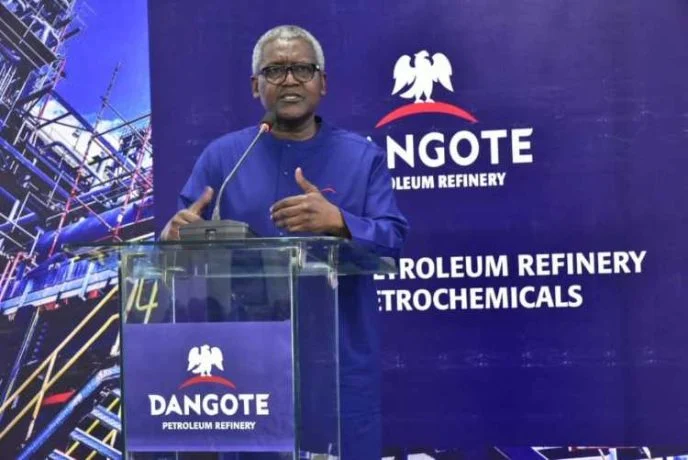
Forbes estimates Dangote’s net worth at $23.9 billion, primarily due to his 92.3 per cent stake in Dangote Petroleum Refinery & Petrochemicals.
At 67 years old, Dangote is once again one of the top 100 richest individuals across the globe, a position he has not held since 2018, according to the Forbes Real-Time Billionaires List.
This places him significantly ahead of South African, Johann Rupert, who is ranked 161st in the world with an estimated wealth of $14.4 billion听and very far above听Mike Adenuga, who is the second richest in Nigeria and 481st in the world, with a net worth of $6.8 billion.
Dangote disrupted the government鈥檚 oil monopoly by constructing the largest petroleum refinery in Africa. After 11 years and numerous challenges, the $23 billion Dangote Refinery began operations in 2024. Located on a vast 6,200-acre site in the Lekki Free Zone, the refinery, at full capacity, will process a remarkable 650,000 barrels per day (b/d), making it the seventh-largest refinery in the world and the largest in Africa. Additionally, the refinery’s adjacent petrochemical complex has an annual production capacity of 3 million metric tons of urea, making it Africa鈥檚 largest fertilizer producer.
The Dangote Refinery is already having a significant impact on global energy markets. Imports of petroleum into Nigeria are on track to reach an eight-year low, affecting European refiners that have traditionally sold to Nigeria, according to energy intelligence firm, Vortexa.
Furthermore, Nigeria has become a net exporter of jet fuel, naphtha (a solvent used in varnishes, laundry soaps, and cleaning fluids), and fuel oil, according to S&P Global.
Dangote sees the refinery as part of a larger vision to transform Nigeria, one of the world’s largest crude oil producers, into a major producer of refined petroleum products. This would enable Nigeria to compete with European refineries and supply gasoline to Nigerian consumers.
In an interview with Forbes, Dangote said: 鈥淚 want to provide a blueprint for industrialisation across Africa. We have to build our nation by ourselves. We have to build our continent by ourselves, not [rely on] foreign investment.鈥�
He believes Africa has long been 鈥渁 mere dumping ground for finished products,鈥� and his refinery represents 鈥渁 pivotal step in ensuring that Africa can refine its own crude oil, thereby creating wealth and prosperity for its vast population.鈥�
Dangote said the refinery is the biggest risk of his life and without success, it would have affected him greatly.听听
鈥淚t was the biggest risk of my life,鈥� says Dangote about his decision to embark on the project.
鈥淚f this didn鈥檛 work, I was dead,鈥� he added.
According to Forbes, Zainab Usman, Director of Africa Programme at the Carnegie Endowment for International Peace,said Nigerians see Dangote as a hero and a real industrialist transforming the country.
鈥淗e is seen in most parts of Nigeria as a hero. He is seen as a real industrialist who builds things,鈥� she said.
A professor of African studies at the Soka University of America, Chika Ezeanya, also corroborated this view, noting that Dangote is meeting the needs of consumers on the continent.听
鈥淚 think he鈥檚 believed staunchly in the fact that Nigerians need products that he has to offer,鈥� he said, adding: 鈥淕overnments can come and go, policies can be changed, but the needs of the Nigerian consumer will only grow and expand.鈥�