









Akinwande Soji-Ojo
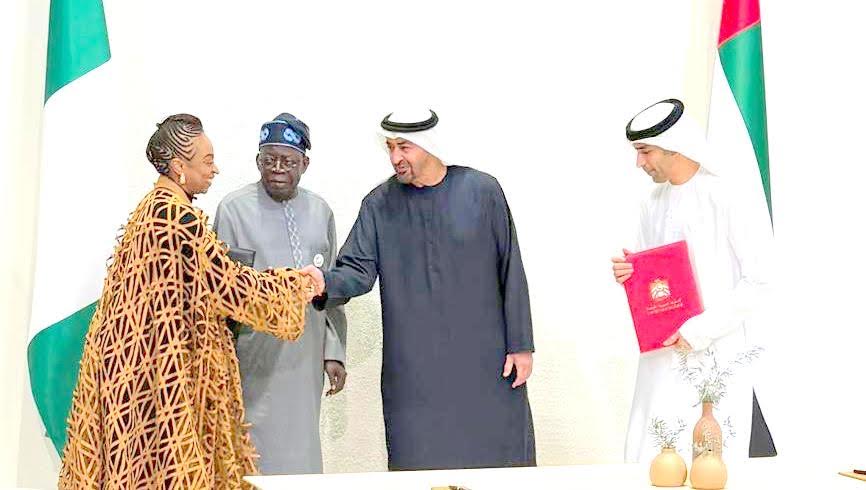
The Minister of Industry, Trade and Investment, Dr Jumoke Oduwole, has explained the far-reaching benefits Nigeria stands to gain from the Comprehensive Economic Partnership Agreement (CEPA) signed between Nigeria and the United Arab Emirates (UAE).
Speaking in a statement she personally signed on Tuesday in Abu Dhabi, Oduwole described the agreement as a historic milestone that would transform economic relations between both countries and deliver tangible benefits for Nigerian businesses, professionals and workers.
She said the agreement was the outcome of focused negotiations led by the Federal Ministry of Industry, Trade and Investment and aligns with President Bola Tinubu鈥檚 Renewed Hope Agenda for economic diversification.
According to the minister, the CEPA prioritises expanded market access for Nigerian goods and services, facilitates quality investment inflows and strengthens Nigeria鈥檚 position in global trade.
鈥淔or Nigerian exporters, the UAE will eliminate tariffs on over 7,000 products.
鈥淲ith immediate effect, agricultural and industrial products such as fish and seafood, oil seeds, cereals, cotton, pharmaceuticals and chemicals will enter the UAE market duty-free,” Oduwole said.
She added that within three to five years, tariffs would also be eliminated on Nigerian machinery, vehicles, electrical equipment, apparel and furniture, providing Nigerian manufacturers with a competitive pathway into one of the world鈥檚 most dynamic trading hubs.
Under the agreement, Nigerian businesses will also be able to establish corporate entities, branches and subsidiaries in the UAE, while business visitors can stay for up to 90 days within a year to explore trade and investment opportunities.
Intra-corporate transferees, including managers, executives and specialists, will be allowed to relocate for renewable three-year periods.
On investment, the minister said the CEPA addresses longstanding barriers to foreign direct investment, giving UAE investors clarity and confidence to invest in Nigeria鈥檚 productive sectors.
鈥淭his will support Nigeria鈥檚 industrialisation agenda, improve transport and logistics connectivity and contribute to the creation of quality jobs for our youthful population,鈥� she noted.
Oduwole explained that Nigeria, in return, committed to eliminating tariffs on about 6,000 products, with tariffs on roughly 60 per cent removed immediately and the remainder phased out over five years. She stressed that these imports are largely industrial inputs, capital goods and machinery needed to strengthen Nigeria鈥檚 productive capacity, while the country鈥檚 Import Prohibition List remains in force.
The minister added that Nigeria鈥檚 services commitments under the agreement cover 99 specific services across 10 sectors, including business, communication, transport, financial services, construction, distribution, health, environment, recreation and tourism.
Describing the CEPA as a strategic instrument for economic transformation, Oduwole said the agreement incentivises Nigerian manufacturers to scale up production for export and positions Nigeria as a gateway for investors seeking access to the African Continental Free Trade Area鈥檚 1.4 billion-person market.
She cited growing participation by UAE institutional investors, including First Abu Dhabi Bank, particularly in infrastructure financing such as the Lagos鈥揅alabar Coastal Road, as a strong vote of confidence in Nigeria鈥檚 reform agenda.
The minister assured that the agreement is consistent with Nigeria鈥檚 obligations under the World Trade Organisation (WTO), AfCFTA and ECOWAS, adding that relevant ministries, departments and agencies would ensure swift implementation.
She commended members of the Nigerian negotiation team and thanked the UAE Minister of Foreign Trade, Dr Thani bin Ahmed Al Zeyoudi, and his team for their cooperation.
鈥淭his agreement was negotiated for the Nigerian private sector.
鈥淚 urge Nigerian businesses to identify their opportunities and move confidently into the UAE market. Nigeria is open for business, and Nigerian businesses now have open access to the UAE, the Middle East and the rest of the world,” Oduwole added.