






The Central Bank of Nigeria(CBN) has introduced a number of measures and strategies targeted at building a more resilient and more self-reliant national economy in three years.
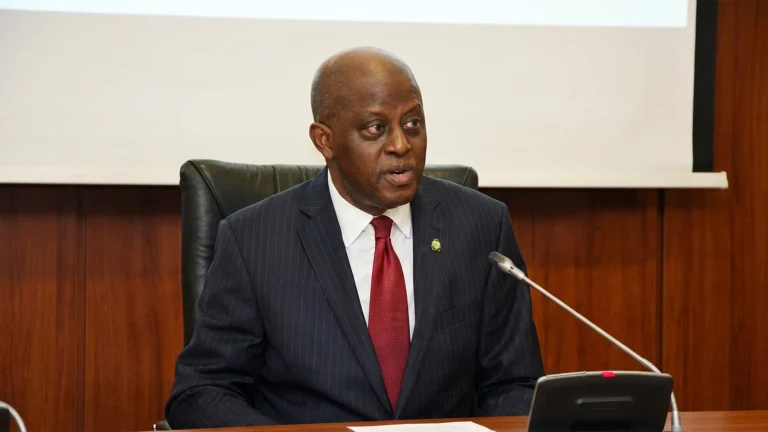
In a statement titled Turning COVIS-19 Tragedy into an Opportunity for a New Nigeria, released on Tuesday, Godwin Emefiele, the CBN Governor said the Policy Response Timeline would provide direction for Nigeria鈥檚 crisis management and gradual recovery of the economy.
According to Emefiele, the policy blueprint has been divided into three stages namely immediate term policy of zero to three months, short term priorities of zero to twelve months and medium-term policy priorities of zero to three months.
Nigeria鈥檚 agricultural reforms had been targeted at making the nation self-reliant in food production, providing key markets across Nigeria, creating millions of jobs and minimising the impact of exchange rate changes on local prices, he noted.
鈥淭hat is why in response to COVID-19, the CBN is strengthening the Nigerian economy by providing a combined N3.5 trillion in targeted measures to households, businesses, manufacturers ad healthcare providers.
鈥淭hese measures are deliberately designed to support the Federal Government鈥檚 immediate fight against COVID-19, to build a more resilient, more self-reliant Nigerian economy.
鈥淲e do not know what the world will look like after this pandemic. Countries may continue to look inwards and globalization as we know it today may be dead for a generation.
鈥淭herefore, as a nation, we cannot afford to continue relying on the world for our food, education and healthcare,鈥� Emefiele said.
The apex bank boss observed that attaining these dreams would demand putting in place state-of-the-art infrastructure, boosting agricultural activities on a large scale, running efficient supply and distribution chains and developing a strong education system.
He emphasised the imperative of looking inwards rather than relying on the world, noting the need to promote food security, quality and affordable healthcare and standard education.
鈥淔or a country of over 200 million people, and projected to be about 450 million in a few decades, we can no longer ignore repeated warnings about the dangers that lie ahead if we don鈥檛 produce locally, because the security and well-being of our nation is contingent on building a well-diversified and inclusive productive economy,鈥� he said.
According to him, the immediate term policy of zero to three months demonstrates government鈥檚 ambition to curb and mitigate the impact of the COVID-19 pandemic.
He confirmed that the short term policy priorities would come into being as a stage for repositioning the economy once President Buhari and health authorities realised that the country鈥檚 coronavirus transmission curve was flattening.
He said: 鈥淎s part of the lessons from the current pandemic, we must ensure that that our value-added sector, the manufacturing industry, is strengthened. Accordingly, the CBN will pursue policies that will reinvigorate our financial support for the manufacturing sector by expanding the intervention all through its value-chain.
鈥淭he CBN will promote the establishment of InfraCo PLC, a world class infrastructure development vehicle, wholly-focused on Nigeria, with combined debt and equity take-off capital of N15 trillion, and managed by an independent infrastructure fund manager.
鈥淭his fund will be utilized to support the Federal Government in building the transport infrastructure required to move agriculture products to processors, raw materials to factories, and finished goods to markets, as envisaged at the CBN Going for Growth Roundtable in March 2020.鈥�
The medium term policy priorities of zero to three years will be launched when the economy fully reopens for business with the CBN planning support for sectors that succeed in boosting mass employment and wealth creation.
鈥淲e will do so by focusing on four main areas, namely, light manufacturing, affordable housing, renewable energy, and cutting-edge research.
鈥淲e will also be considering ways to assist the Mortgage Finance Sub-sector as well as build capacity at the State levels for their land administration agencies to process and issue land titles promptly, implement investment friendly foreclosure laws and reduce the cost of land documentation, as this has remained a major inhibiting factor in the provision of affordable housing in the country,鈥� the CBN governor said.