






By Emmanuel Adeleke
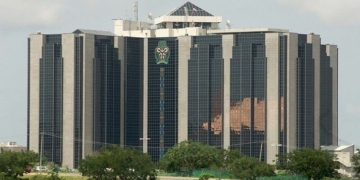
The Central Bank of Nigeria (CBN) has directed banks and other financial institutions to freeze the accounts of customers linked to terrorism financing.
The apex bank, in a circular signed by Olubunmi Ayodele-Oni on Thursday, said the directive followed recent designations by the Nigeria Sanctions Committee (NSC) and the United States Treasury Department’s Office of Foreign Assets Control (OFAC).
Recall that the US recently listed three individuals and six entities allegedly linked to the financing of the Islamic State (ISIS), including three Nigerian bureau de change (BDC) operators.
A spokesperson for the US State Department, Tommy Pigott, said in a statement that a Nigerian, Muhammad Mukhtar Adamu, was among the three individuals and six entities sanctioned for allegedly facilitating ISIS financing across Europe, the Middle East and West Africa.
Reacting to the development, the CBN directed all financial institutions to “immediately freeze, without prior notice, all funds, assets and other economic resources belonging to, owned, held or controlled, directly or indirectly, by the designated persons and entities.”
The apex bank also directed financial institutions to screen existing customers, beneficial owners and transactions against the updated sanctions list.
The CBN further ordered banks to ensure that no funds, financial services or economic resources are made available, directly or indirectly, to the designated persons and entities.
The regulator asked financial institutions to file Suspicious Transaction Reports (STRs) with the Nigerian Financial Intelligence Unit (NFIU) for any confirmed or attempted matches.
Banks are also required to “submit reports to the CBN within 48 hours, detailing the status of any matches, affected accounts, amounts frozen and actions taken.”
The CBN further instructed financial institutions to intensify monitoring for indicators of terrorism financing, including the rapid movement of funds, the use of money service businesses and transactions involving high-risk jurisdictions.
The apex bank warned that institutions that fail to comply with the directive risk sanctions under the Banks and Other Financial Institutions Act (BOFIA) 2020 and other applicable laws.
The CBN added that it would conduct off-site reviews, on-site examinations and supervisory engagements to verify compliance with the sanctions measures.