









President Muhammadu Buhari, the Sultan of Sokoto, Sa谩d Abubakar, and a Maiduguri-based Islamic cleric, Sheikh Ibrahim Saleh are among those listed as the world鈥檚 50 most influential Muslim leaders.
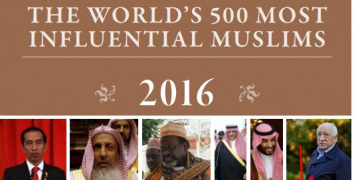
The Muslim 500, an annual publication of the World鈥檚 500 most influential Muslims, recognised the three Nigerian leaders in its 7th edition published recently.
The publication says there are 1.7 billion Muslims in the world today, making up approximately 23% of the world鈥檚 population, or one-fifth of mankind.
It said those recognised have a sense of belonging to Muslim community worldwide, besides being citizens of their respective countries.
The publication measured influence some Muslims have on other Muslims to include: any person who has the power (be it cultural, ideological, financial, political or otherwise) to make a change that will have a significant impact on the Muslim world.
The impact could be either positive or negative, depending on one鈥檚 point of view, it said.
It added that the influence could be of a religious scholar directly addressing Muslims and influencing their beliefs, ideas and behaviour, or it could be a ruler shaping the socio-economic factors within which people live their lives, or of artists shaping popular culture.
鈥淭he first two examples also point to the fact that the lists, and especially the Top 50, are dominated by religious scholars and heads of state. Their dominant and lasting influence cannot be denied, especially the rulers, who in many cases also appoint religious scholars to their respective positions,鈥� it said.
While the publication listed the top 500 influential Muslim leaders, the first part recognised the top 50 in which Messrs. Buhari, Abubakar and Saleh appear.
President Buhari was listed as the Number 20, while the Sultan and Sheikh Saleh are listed as numbers 24 and 38 respectively.
In a short citation, The Muslim 500 recognised Mr. Buhari鈥檚 past military career, his anti-corruption credentials and his promise and subsequent efforts to deal with the insurgent group, Boko Haram.
It also recognised that on economy and infrastructure.
鈥淧resident Buhari was the first chairman of the Nigerian National Petroleum Corporation (NNPC) and was the mastermind behind the construction of 20 oil depots throughout Nigeria, a project involving over 3200 kilometres of pipelines,鈥� the magazine said. 鈥淏oth the Warri and Kaduna refineries were built under his leadership. He also established the blueprints for the country鈥檚 petro-chemical and liquefied natural gas programmes鈥�.
On environment, it said Mr. Buhari is 鈥渁n active environmentalist who has drafted several plans to preserve wildlife in Nigeria. He has also exerted great efforts on the conservation of nature in Nigeria; such as controlling the logging industry whereby he has ensured that double the number of trees felled are replaced by loggers. He has also worked on restricting the Ecological Fund Office so it can deliver on environmental challenges鈥�.
As for the Sultan Abubakar, the publication stated that he holds an important administrative influence in Nigerian religious life.
鈥淎bubakar is the titular ruler of Sokoto in northern Nigeria and is also the head of the Nigerian National Supreme Council for Islamic Affairs. Leadership of this council means that the Sultan of Sokoto remains the only figure that can legitimately claim to speak on behalf of all Nigerian Muslims.
鈥淭his role has become increasingly influential over the years with a rise in interreligious tensions between Nigeria鈥檚 Muslim majority north and Christian-majority south,鈥� it said.
The Muslim 500 also said the Sultan has started many initiatives to counter and reduce the influence of Boko Haram, including inviting an international joint Muslim/Christian Delegation to visit Nigeria.
As for Sheikh Saleh, the publication recognised him as a lecturer in the fields of Tafsir Al Qur鈥檃n (exegesis) and the Hadith as well as聽Islamic sciences, jurisprudence and ethics.
鈥淗e has over聽100 written works. He has held and still heads several significant positions, some of which are, founder and mentor of the Islamic renaissance Organization, adviser to the Federal Government on its Islamic Affairs since 1992, Assistant Secretary-general for African Affairs in the World Islamic People鈥檚 Leadership 1989 and many more鈥�.
Source: Vanguard