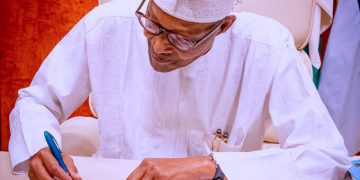







President Muhammadu Buhari has signed the Petroleum Industry Bill (PIB) 2021 into law.
A statement issued the Special Adviser to the President on Media and Publicity, Femi Adesina, said Buhari assented to the bill on Monday in his determination to fulfill his constitutional duty.
The passage of the PIB has proved to be a real nightmare for successive administrations since the need for the bill was first mooted by the administra of former President Olusegun Obasanjo.
In 2018, after the National Assembly passed a聽harmonised version聽of the bill, the petroleum industry governance bill (PIGB), President Muhammadu Buharirefused assent聽due to 鈥渓egal and constitutional reasons.鈥�
The PIB contains five chapters, including governance and institutions, administration, host communities development, petroleum industry fiscal framework and miscellaneous provisions in 319 clauses and 8 schedules.
Adesina also noted that Buhari is working from home in line with the five days鈥� quarantine as required by the presidential steering committee on COVID-19 after returning from London on Friday, August 13.
鈥漈he ceremonial part of the new legislation will be done on Wednesday, after the days of mandatory isolation would have been fulfilled,鈥� the statement read
The Petroleum Industry Act provides legal, governance, regulatory and fiscal framework for the Nigerian petroleum industry, the development of host communities, and related matters.
The Senate passed the bill on July 15, 2021, while the House of Representatives did the same on July 16.
On July 1, the Senate and House of Representatives had recommended three and five per cent respectively to host communities.
This, however, generated reactions from stakeholders in the oil industry and leaders in the Niger-Delta region.
Several stakeholders including聽Seriake Dickson, the Senator representing Bayelsa West;聽Douye Diri, Bayelsa State Governor and Edwin Clark, an Ijaw national leader, have argued that three per cent is unacceptable
At the public hearing on the bill, representatives of the host communities had demanded that 10 per cent should be located to them on the grounds that three per cent is not enough to improve the standard of living of their people.