Akinwande Soji-Ojo
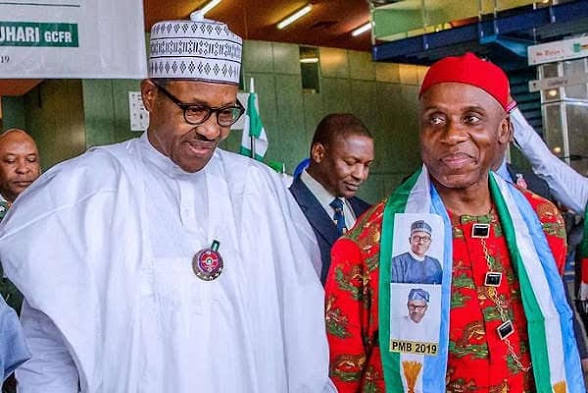
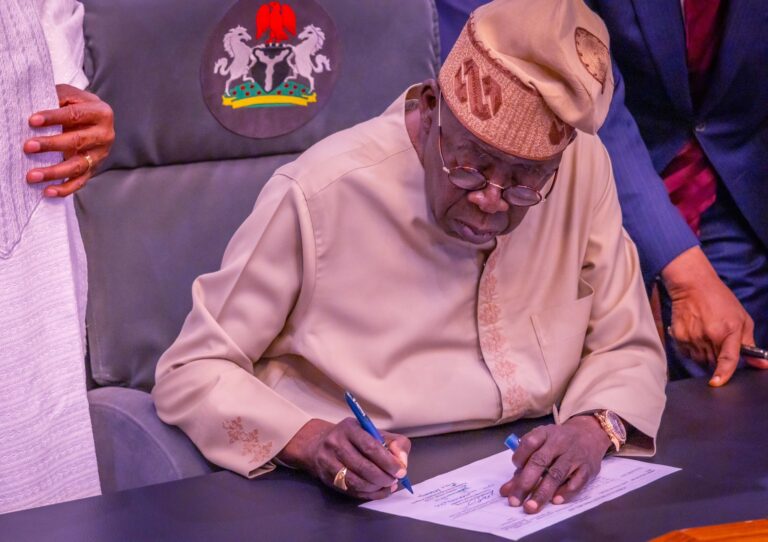
President Muhammadu Buhari, on Friday, presented a record N20.5 trillion 2023 appropriation bill to the joint session of the national assembly.
The national assembly had approved the medium-term expenditure framework (MTEF) and fiscal strategy paper (FSP) 鈥� parameters on which the 2023 budget will be framed.
While presenting the details of the budget, Buhari said the 2023 transition budget was designed to address critical issues and lay a solid foundation for the incoming administration.
He said that based on the parameters and fiscal assumptions, the revenue generation is projected to hit about N16.87 trillion.
A breakdown of the budget, christened 鈥楤udget of Fiscal Consolidation and Transition,鈥� shows that N744.11 billion was earmarked for statutory transfers; N8.27 trillion for non-debt recurrent costs; N1.11 trillion for overhead costs; N4.99 trillion for personnel costs; and N5.35 trillion for capital expenditure.
The budget also include N854.8 billion for pensions, gratuities and retirees鈥� benefits; N6.31 trillion for debt servicing; sinking fund of N247.73 billion to retire certain maturing bonds; and N470 billion for revitalisation and salary enhancements in tertiary institutions.
鈥淲e expect the total fiscal operations of the federal government to result in a deficit of N10.78 trillion.
鈥淭his represents 4.78 percent of estimated GDP, slightly above the three percent threshold set by the Fiscal Responsibility Act 2007.
鈥淎s envisaged by the law, we need to exceed this threshold considering the need to continue to tackle the existential security challenges facing the country.
“We plan to finance the deficit mainly by new borrowings totalling N8.80 trillion, N206.18 billion from privatisation proceeds and N1.77 trillion drawdowns on bilateral/multilateral loans secured for specific development projects/programmes.
“Over time, we have resorted to borrowing to finance our fiscal gaps. We have been using loans to finance critical development projects and programmes aimed at further improving our economic environment and enhance the delivery of public services to our people.
“As you are aware, we have witnessed two economic recessions within the period of this administration. A direct result of this is the significant decline in our revenue generating capacity.
“In both cases, we had to spend our way out of recession, resulting in higher public debt and debt service. It is unlikely that our recovery from each of the two recessions would have been as fast without the sustained government expenditure funded by debt,” Buhari said.