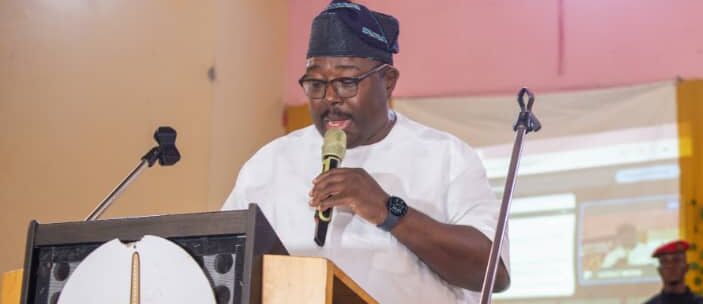







The National Assembly is set to release a new Electoral Act aimed at correcting imperfections in the existing law, the Senator representing Oyo South Senatorial District, Dr. Sharafadeen Alli, has revealed.
Alli disclosed this on Tuesday while delivering his goodwill message at the 8th annual Senator Abiola Ajimobi Roundtable held at the University of Ibadan. The roundtable was themed “Pathways to Electoral Credibility: Reforming Political Parties, Re-engineering Citizens, and Restoring Trust in Nigerian Democracy.�
Responding to concerns raised by speakers on electoral credibility, the senator, who chairs the Senate Committee on the Independent National Electoral Commission (INEC), noted that Nigeria’s Electoral Act has undergone amendments five times since the country returned to democratic rule in 1999, reflecting ongoing efforts to strengthen the electoral process.
He recalled that the Electoral Act, 2001, the first post-military electoral law under the Fourth Republic, established the basic legal framework for INEC, voter registration, political parties and elections, but was widely criticised for loopholes and weak sanctions that contributed to controversies in subsequent polls.
This was replaced by the Electoral Act, 2002, which tightened rules on party registration and candidate nominations, strengthened INEC’s regulatory powers and expanded provisions on electoral offences, though elections conducted under it remained heavily disputed.
Ahead of the 2007 polls, the Electoral Act, 2006 introduced stricter timelines for party primaries, clearer rules on candidate disqualification, expanded campaign finance regulations and improved procedures for election petitions and tribunals.
The Electoral Act, 2010 (as amended) marked one of the most consequential reforms, regulating party primaries, strengthening voter registration processes, granting INEC greater independence in setting election timetables and empowering courts to nullify wrongful nominations. It governed the 2011, 2015 and 2019 general elections.
The most recent overhaul, the Electoral Act, 2022, legalised electronic transmission of results, introduced the Bimodal Voter Accreditation System (BVAS), tightened campaign finance rules, improved internal party democracy and was applied during the 2023 general elections.
Alli said the proposed new act would build on these reforms to address lingering gaps and boost public confidence in Nigeria’s electoral system.

Meanwhile, speakers at the roundtable praised Mrs. Florence Ajimobi for her courage and values, which they said have sustained the annual event six years after the death of her husband, former Oyo State Governor, Senator Abiola Ajimobi.
The lecture was delivered by Prof. Ibrahim Gambari, former Nigeria’s Permanent Representative to the United Nations and former Chief of Staff to the late former President Muhammadu Buhari.
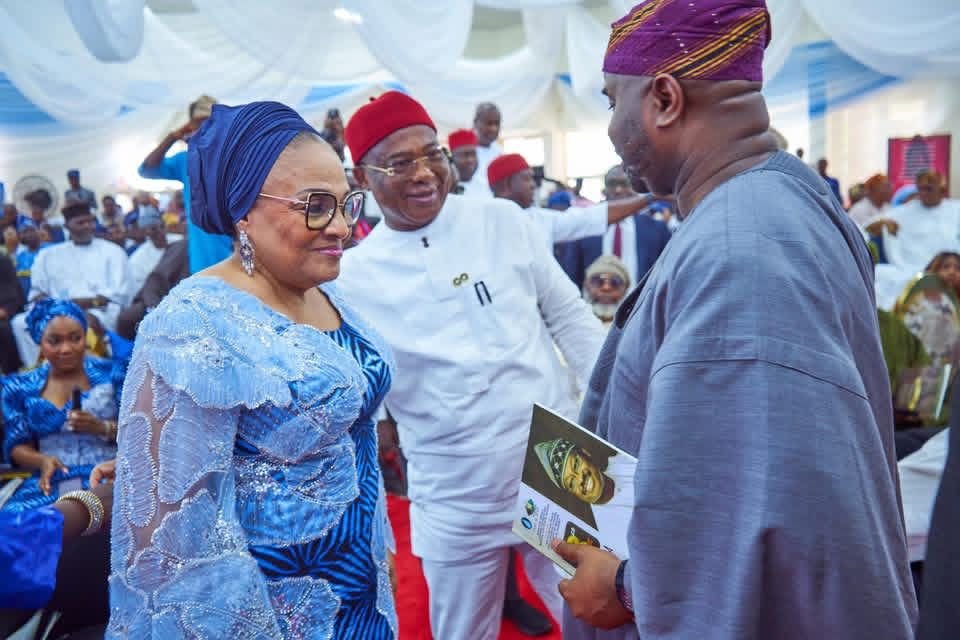
Dignitaries at the ceremony include the Executive Chairman of the Federal Inland Revenue Service (FIRS), Dr Zacch Adedeji, who represented President Bola Tinubu; former Ogun State Governor and chairman of the occasion, Chief Olusegun Osoba; Imo State Governor and Chairman of the Progressive Governors’ Forum, Senator Hope Uzodimma; Oyo State Governor, Seyi Makinde, represented by his deputy, Barrister Bayo Lawal; Ogun State Deputy Governor, Mrs Noimot Salako-Oyedele, who represented Governor Dapo Abiodun; Speaker of the House of Representatives, Rt. Hon. Tajudeen Abbas; Senator representing Oyo Central Senatorial District, Yunus Akintunde; Senator representing Oyo South Senatorial District, Sharafadeen Alli; member of the House of Representatives representing Iddo/Ibarapa East Federal Constituency, Hon. Remi Oseni; member of the House of Representatives representing Ogbomoso North/Ogbomoso South/Oriire Federal Constituency, Hon. Olamijuwonlo Alao-Akala; Minister of Power, Chief Bayo Adelabu; and the Soun of Ogbomoso, Oba Ghandi Olaoye, among others.