









By Efa Sunday
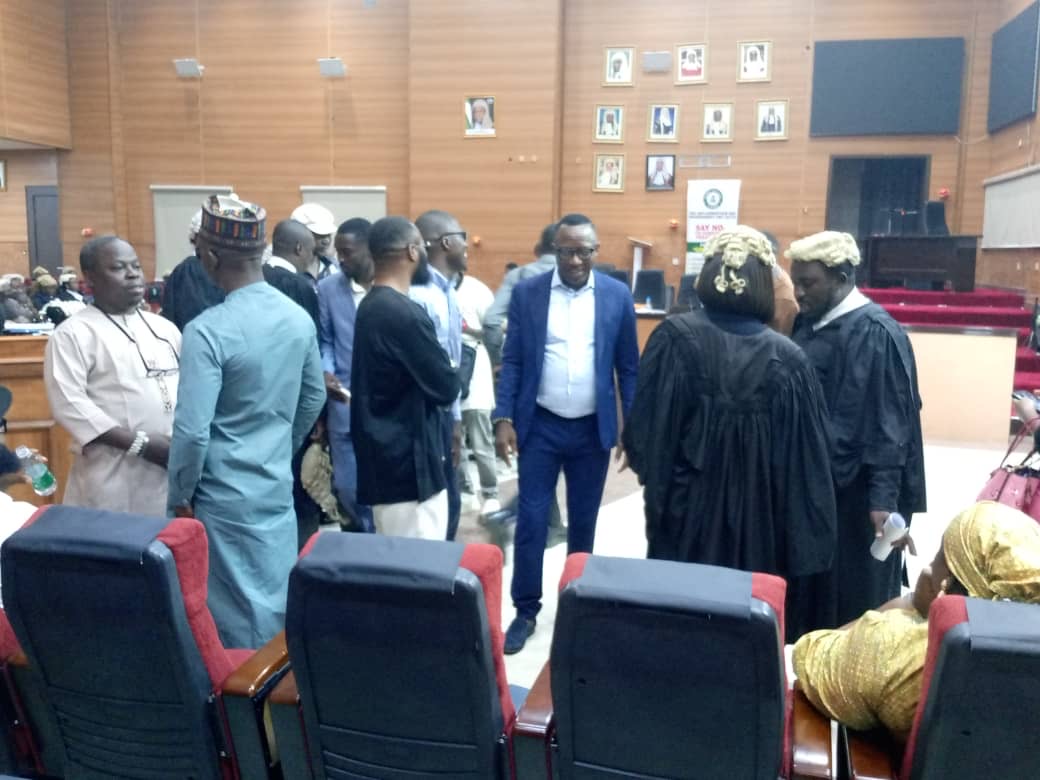
Activist and former presidential candidate of the African Action Congress (AAC), Omoyele Sowore, on Monday pleaded not guilty to amended cybercrime charges before the Federal High Court in Abuja over a social media post concerning President Bola Tinubu.
At the resumed hearing, prosecuting counsel, Akinlolu Kehinde, SAN, told the court that the Federal Government had filed a two count amended charge on December 5, 2025, listing Sowore as the sole defendant after social media platforms X and Facebook were struck out of the case.
Kehinde said the prosecution was ready to proceed with trial and had a witness in court. However, defence counsel, Abubakar Marshal, opposed the move, arguing that the amended charge was not accompanied by witness statements and other relevant documents.
Marshal relied on Section 36(6) of the 1999 Constitution, which guarantees the right of an accused person to be informed in detail of the nature of the offence, including access to witness names and statements to enable proper preparation of a defence.
In response, the prosecution maintained that further adjournment would not serve the interest of justice, noting that previous delays were caused by the defence. Kehinde argued that criminal proceedings only require a list of witnesses and exhibits, unlike civil matters.
In his ruling, Justice Mohammed Umar ordered the prosecution to make available all relevant documents to the defence in the interest of fair hearing. The court subsequently adjourned the matter until January 22 for commencement of trial.
According to the charge sheet, Sowore is accused of knowingly publishing false messages on his social media platforms by describing President Tinubu as a 鈥渃riminal.鈥�
One of the posts cited by the prosecution reads: 鈥淭his criminal @officialABAT actually went to Brazil to state that there is NO MORE corruption under his regime in Nigeria. What audacity to lie shamelessly!鈥�
The prosecution alleges that the statement was capable of causing a breakdown of law and order and posed a threat to public safety.
The offence, if proven, attracts a minimum fine of 鈧�15 million or a five year prison term.