









Akinwande Soji-Ojo
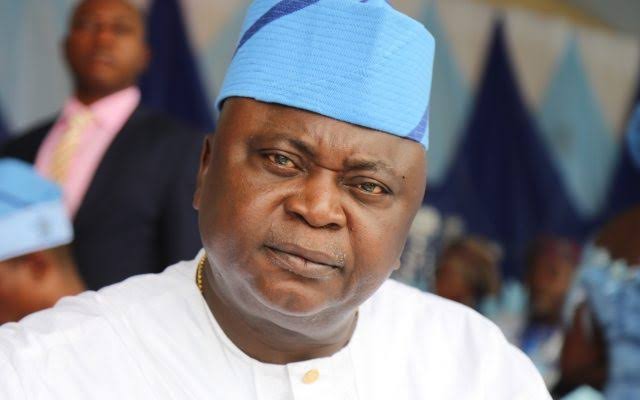
There is no end in sight to the crisis rocking the opposition Peoples Democratic Party (PDP), as the Abia State chapter of the party, on Wednesday, insisted that the chairman of the Board of Trustees (BoT),聽 Senator Adolphus Wabara, remain suspended.
Reacting to the party鈥檚 National Working Committee鈥檚 declaration of the suspension as illegal, the Abia PDP leadership insisted that there was no going back.
The State Working Committee had on Tuesday announced Wabara鈥檚 suspension for allegedly endorsing Abia State Governor, Alex Otti, a member of the Labour Party, for a second term in office.
The committee termed Wabara鈥檚 endorsement of Otti as an anti-party activity, prompting his suspension.
But in a swift reaction, the NWC in a statement made available to newsmen by the National Publicity Secretary,聽Debo Ologunagba, rejected the suspension, declaring it illegal.
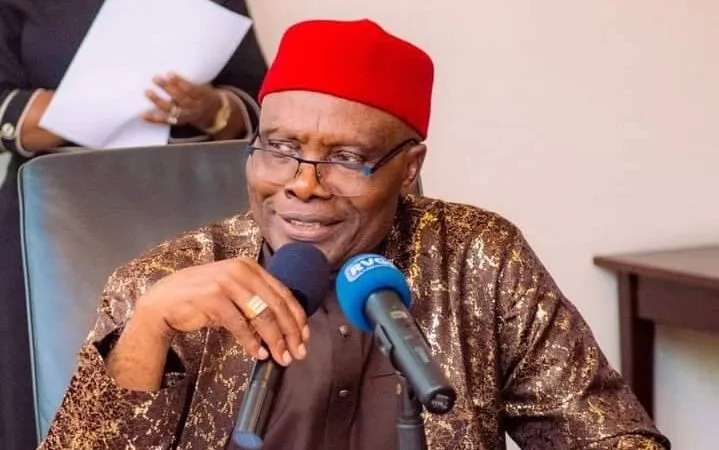
However, pushing back on Wednesday, Abia PDP, in a statement by its chairman, Elder Abraham Amah, insisted that Wabara鈥檚 suspension was legal.
Amah said the Abia State chapter noted聽 鈥渢he statement issued by the National Publicity Secretary of our great party, Hon. Debo Ologunagba, purportedly dismissing the suspension of the Chairman of the Board of Trustees (BoT), Senator Adolphus Wabara.”
“We categorically state that the decision of the Abia State Executive Committee to suspend Senator Wabara met every constitutional requirement of the party and cannot be invalidated by a mere statement from the National Publicity Secretary, which is not a by-product of any official resolution of the National Working Committee.
鈥淔or the avoidance of doubt, the Abia State PDP, in taking this decision, relied on the provisions of the PDP Constitution (as amended in 2017).
鈥淪ection 58(1)(b) & (h) 鈥� This section provides that a member of the party may be sanctioned for engaging in anti-party activities or any conduct likely to bring the party into disrepute. The endorsement of a sitting governor from another political party, as done by Senator Wabara, clearly constitutes a violation of this provision.
鈥淪ection 59(3) explicitly states that the Board of Trustees is not immune from disciplinary actions, where necessary. As such, the decision to sanction Senator Wabara is well within the powers of the Abia State PDP.
鈥淪ection 59(4) affirms that the party can take disciplinary actions against any member whose conduct contravenes the principles of the PDP, further reinforcing the legality of the SEC鈥檚 decision,鈥� the chairman added.
Amah said while Ologunagba referenced Section 57(7) of the party鈥檚 constitution, 鈥渉e conveniently ignored Section 57(6), which provides that the power to take disciplinary action against any member is vested in the relevant executive committees at all levels of the party, subject to due process.鈥�
He added: “The Abia PDP has acted within this legal framework. Furthermore, we affirm that only a competent court of law or the National Executive Committee of the PDP has the authority to overturn the decision of the Abia State Executive Committee. Until such a competent authority pronounces otherwise, the suspension of Senator Wabara remains in full effect.鈥�
The chairman urged the National Publicity Secretary to 鈥渆xercise restraint and avoid issuing statements that lack constitutional basis or mislead the public.鈥�
鈥淭he PDP, as a party, must uphold discipline and accountability at all levels, and no individual, regardless of position, is above the constitution of the party.
鈥淎s a state chapter, we shall not hesitate to seek appropriate judicial redress should any attempt be made to subvert the decision of the Abia PDP SEC through unconstitutional means,鈥� Amah stated.
NWC affirms Udeh-Okoye as National Secretary
Meanwhile, the PDP NWC has affirmed聽Sunday Udeh-Okoye as the party鈥檚 National Secretary.
In a statement on Wednesday by the National Publicity Secretary, Debo Ologunagba, the NWC declared that it was bound by the judgement of the Court of Appeal, which recognised Ude-Okoye鈥檚 position.
鈥漈he National Working Committee of the Peoples Democratic Party, at its meeting today, Wednesday, February 12, 2025, extensively considered the memo dated 11th February 2025, presented by the Acting National Chairman on the issue of the National Secretary of the PDP.
鈥淭he NWC, in considering the memo, thoroughly examined the attached documents, namely: the declaratory judgement of the High Court of Enugu, the judgement of the Court of Appeal, Enugu Division, which pronounced and declared Rt. Hon. S.K.E. Udeh-Okoye as the National Secretary of the PDP; the legal opinion and advice by Dr. Kabiru T. Turaki (SAN), as well as that of the National Legal Adviser of the PDP,” he said.
Following the review, Ologunagba said the NWC formally acknowledged and confirmed Udeh-Okoye as the substantive National Secretary, adding that there was no superseding judgement or order from a higher court to challenge the Court of Appeal鈥檚 decision.
鈥淎fter due consideration of the memo and the attachments, the NWC overwhelmingly recognises, acknowledges, and confirms Rt. Hon. S.K.E Udeh-Okoye as the substantive National Secretary of the PDP in full compliance with and obedience to the judgement of the Court of Appeal, recognising that there is no subsisting or superseding judgement or order from any court of superior authority or hierarchy.鈥�
The NWC also announced that it had begun transmitting its resolution affirming Udeh-Okoye鈥檚 position to the Independent National Electoral Commission (INEC) and other relevant bodies for official recognition.
鈥淭he NWC has commenced the transmission of its Resolution/Decision affirming Rt. Hon. S.K.E. Udeh-Okoye as the PDP National Secretary to the Independent National Electoral Commission and other relevant bodies for recognition in line with the judgement of the Court of Appeal,” Ologunagba said.
The NWC expressed appreciation to PDP leaders, members, and stakeholders for their loyalty and adherence to the rule of law during this period of internal disputes.
It reassured party members of its commitment to upholding the PDP Constitution, fostering stability and democracy, and prioritising the well-being of Nigerians.