Akinwande Soji-Ojo
The administration of President Bola Tinubu is planning to spend N8.03 trillion (29.2%) of its projected N27.5 trillion budget on defence and security, education, health and infrastructure in 2024.
Minister of Budget and National Planning, Abubakar Bagudu, disclosed this during the presentation of the 2024 budget breakdown, on Wednesday.
The administration is also eyeing N10.4 trilion from tax, dividends and others.
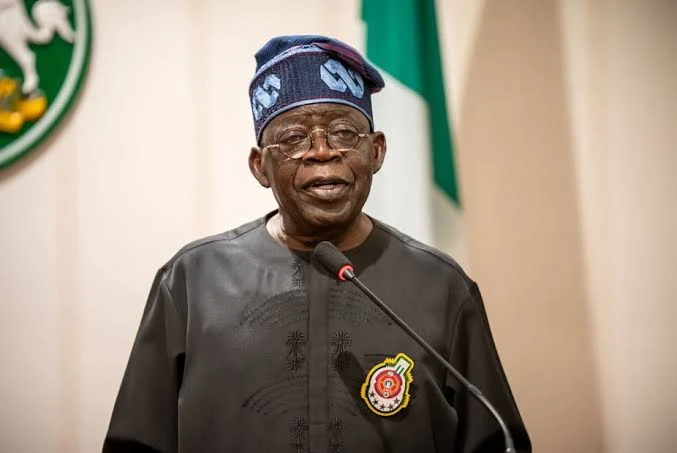
While presenting the 2024 Appropriation Bill, christened 鈥楤udget of Renewed Hope鈥� to a joint session of the National Assembly on Wednesday, Tinubu said the budget proposal was aimed at completing critical infrastructure projects that would help address structural problems in the economy while lowering the costs of doing business for companies and the cost of living for the average Nigerian.
鈥淭he 2024 Appropriation has been themed the Budget of Renewed Hope. The proposed budget seeks to achieve job-rich economic growth, macro-economic stability, a better investment environment, enhanced human capital development, as well as poverty reduction and greater access to social security.
鈥淒efence and internal security are accorded top priority. The internal security architecture will be overhauled to enhance law enforcement capabilities and safeguard lives, property and investments across the country.
鈥淗uman capital is the most critical resource for national development. Accordingly, the budget prioritizes human development with particular attention to children, the foundation of our nation,” the president declared.
Tinubu noted that the government expects the country鈥檚 economy to grow by a minimum of 3.76 per cent (GDP as of the end of September 2023 was 2.54 per cent) despite the current inflationary headwinds which are expected to moderate to 21.4 per cent in 2024. Inflation was 27.33 per cent as of the end of October.
Highlighting the components of the 2024 budget proposal, the president said: 鈥淎fter a careful review of developments in the world oil market and domestic conditions, we have adopted a conservative oil price benchmark of $77.96 per barrel and daily oil production estimate of 1.78 million barrels per day.
鈥淲e have also adopted a Naira to US Dollar exchange rate of N750/$ for 2024. Accordingly, an aggregate expenditure of N27.5 trillion is proposed for the Federal Government in 2024, of which the non-debt recurrent expenditure is N9.92 trillion while debt service is projected to be N8.25 trillion and capital expenditure is N8.7 trillion.鈥�
According to the budget estimates, funding to the education sector–N2.18 trillion, is 101.85 per cent more than the N1.08 trillion that was budgeted for the sector in the 2023 appropriation.
Out of the amount, N1.23 trillion is for the Federal Ministry of Education and its agencies, N251.47 billion for the Universal Basic Education Commission (UBEC), and N700 billion as transfers to tertiary education trust fund.
While presenting the budget, Bagudu stated that N50 billion of the amount would be for the student loan scheme of the Federal Government.
Funding to the defence and security sector, including the military, police, intelligence, and paramilitary, increased by 46.39 per cent to N3.25 trillion from the N2.22 trillion that was earmarked in 2023鈥檚 appropriation for the defence and police affairs ministries.
Based on the document presented by the minister, the allocation to the health sector improved by 23.15 per cent to N1.33 trillion from N1.08 trillion in the 2023 appropriation.
Out of the amount, N1.07 trillion has been allocated to the Federal Ministry of Health and its agencies, N137.21 billion for Gavi/Immunisation funds, including counterpart funding for donor-supported programmes, while N125.74 billion was earmarked for transfer to basic healthcare provision fund.
Additionally, N1.32 trillion will be expended on the provision of infrastructure in the power, transport, water resources, aviation, works and housing sectors. Explaining reasons for the low provisions, the former Kebbi governor said the president had directed for increased private sector involvement in infrastructure provision.
He revealed that all ministries have been given matching orders to woo willing domestic and foreign investors to improve the nation鈥檚 infrastructure.
鈥淓qually on infrastructure spending, part of the instruction of Mr President to the cabinet is that as he has done in Lagos, we have to bring in private sector investments into infrastructure. He has mandated all ministries to examine how to access investors who are willing to put money into infrastructure. What the government can put into infrastructure is small compared to what the private sector can bring
“So, a number of roads and railways, airports, housing and a number of infrastructure projects will be considered. The government funding is to capitalise private investment,” Bagudu said.
Also, N534 billion has been budgeted for social investments and poverty reduction programmes in 2024. The government expects to spend N10.26 trillion on non-debt recurrent expenditure, N8.25 trillion on debt servicing, N243 billion on sinking funds, and N8.70 trillion on capital expenditures.
The minister further noted that the 2024 budget was prepared amidst the backdrop of a challenging global and domestic economic environment.
鈥淭his prevailing global environment is characterised by slowing global growth; persistent inflationary pressures prompting monetary tightening with the inherent negative impact on capital inflow to emerging markets economies.
鈥淎lso constrained investment spending; supply-chain disruptions; and rising geo-political tensions, including the Russia and Ukraine war have severely affected global food and energy prices,鈥� the minister said.
While giving insights on the performance of the 2023 budget, Bagudu stated that Federal Government has gotten N8.65 trillion in revenues as of September 2023, with an oil revenue of N1.42 trillion and non-tax revenue of N2.50 ttrillionn
Bagudu stated that the estimated aggregate expenditure for 2023 (inclusive of the supplementary budget) is N24.82 trillion, but actual spending has been N13.7 trillion.
Whie presenting the budget, Tonight urged firms in the country to join in infrastructure development across the country.
According to the president, the country remains committed to meeting its debt obligations with projected debt service at 45 per cent of total expected total revenue.
鈥淏udget deficit is projected at N9.18 trillion in 2024 or 3.88 per cent of GDP. This is lower than the N13.78 trillion deficit recorded in 2023 which represents 6.11 per cent of GDP. The deficit will be financed by new borrowings totalling N7.83 trillion, N298.49 billion from privatisation proceeds and N1.05 trillion drawdown on multilateral and bilateral loans secured for specific development projects,” Tinubu said.
The president, however, noted that the government is challenged when it comes to funding. According to him, 鈥渋n view of the limited resources available through the federal budget, we are also exploring Public Private Partnership arrangements to finance critical infrastructure.
鈥淲e, therefore, invite the private sector to partner with us to ensure that our fiscal, trade and monetary policies, as well as our developmental programs and projects, succeed in unlocking the latent potential of our people and other natural endowments, in line with our national aspirations.鈥�
To fund the budget, the Federal Government expects to make N18.32 trillion as revenue. The sum of N7.94 trillion is expected from oil-related sources,while the balance of N10.39 trillion is projected to be from non-oil-related sources. Projected independent revenue is expected to be N1.9 trillion, with N685.63 billion from grants and donor-funded projects and dividends from NLNG, Bank of Industry, Development Bank of Nigeria, Galaxy Backbone, and Bank of Agriculture are projected at N357.92 billion.
Commenting on the need to boost tax revenues, Tinubu in his address said: 鈥淲e are currently reviewing our tax and fiscal policies. Our target is to increase the ratio of revenue to GDP from less than 10 per cent currently to 18 per cent within the term of this administration. The government will make efforts to further contain financial leakages through effective implementation of key public financial management reforms.鈥�